Tuesday, June 30, 2015

SO LONG LETTY (1929)

Letty (Charlotte Greenwood) is a wise-cracking dynamo who works at a Florida resort hotel as a beautician. Her husband Tommy is tired of his wife's constant ebullience and the fact that she's never at home to clean and cook. Their next door neighbors, Grace and Harry, have the opposite problem; Grace is a household homebody and he wants to live it up. One night, the couples decide to swap mates for a week, with the wives hoping it will make their hubbies appreciate them more. Meanwhile, Harry's rich uncle Claude (Claude Gillingwater) arrives for a visit with his two granddaughters who aspire to flapperdom; they first stop at the hotel where Greenwood's antics irritate Claude so much that he leaves and heads straight for Harry's. Complications ensue.

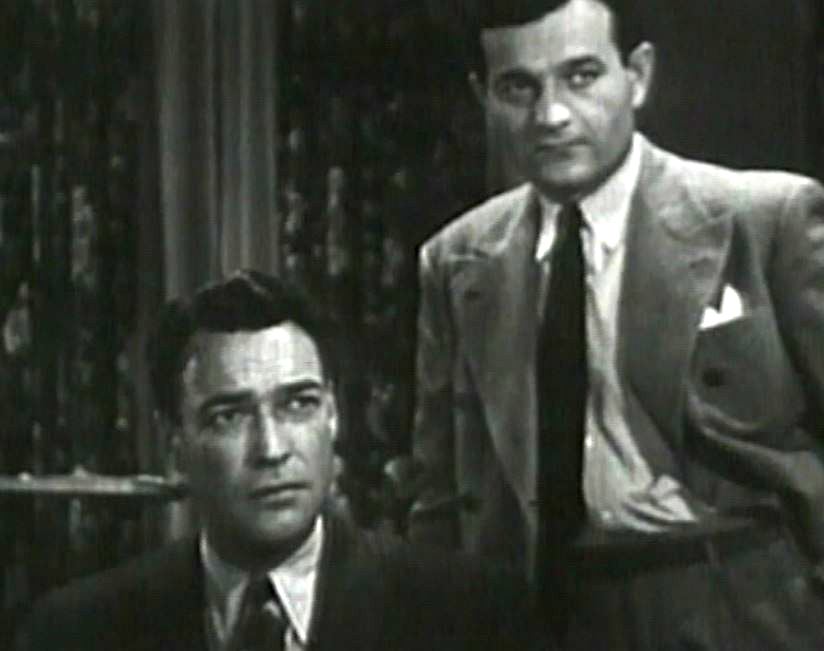
The above is not a chronological summary; the movie actually begins with Claude and his daughters tangling with Letty at the hotel then moves to the stories of the neighbors. Despite Claude's importance at the beginning of the film, he vanishes from the action for a quite a while and the focus is really on the mate-swapping. Although this is an early talkie, it doesn't really feel like one; it rarely feels stagy or awkwardly paced. Your tolerance for this, however, will depend on how you feel about the lanky, raucous Greenwood, who gets to do a couple of her trademark leg lifts—with a nice visual payoff at one point when her husband tries to imitate her and lift his leg over their gate. Patsy Ruth Miller (as Grace) and Gillingwater turn in so-so performances, but Grant Withers (pictured above with Greenwood) is a little better as the restless Harry. There are a handful of awkwardly placed songs, but it's not really a full-fledged musical. The wife-swapping is the most interesting element here, though a brief reference implies that they will not be swapping in the bedroom. A unique relic of the early sound era. [TCM]

Monday, June 29, 2015

I SHOT BILLY THE KID (1950)

It's July, 1878, and Billy the Kid (Don Barry) and his sidekick Charley (Tom Neal) make an escape from what turns out to be the last battle in the infamous Lincoln County War and take up life as outlaws. Later, they run across sheriff Pat Garrett (Robert Lowery), wounded by Indians, and Billy saves his life, which leads Garrett to go to New Mexico governor Lew Wallace and ask him to extend a pardon to Billy, as Wallace did to the other participants in the "war," in exchange for Billy giving up his guns. Billy meets with Wallace but turns down the offer and goes back into hiding, seeing his girlfriend Francesca when he can. Eventually, Billy is captured, escapes, and is hunted down by a reluctant Garrett, and is finally caught and killed at Francesca's house.

This is a drab and generally lifeless retelling of the Billy the Kid story. The biggest problem isn't the production, which seems to have been done on the high end of a B-picture budget, but with Barry, the actor playing Billy. The film claims to be faithful to history—it's framed by an older Garrett visiting Billy's grave—but it's a big mistake to have an actor who is almost 40 playing the under-21 Billy, especially when it's pointed out how young he is. It feels like Barry is trying desperately to channel Mickey Rooney as Andy Hardy in his performance, but it's a low-energy attempt that fails, and Billy just seems tired and worn out from first to last. I liked Lowery as Garrett (pictured above), and Tom Neal as the sidekick—actually, Neal could have done a much better Billy even though he was almost as old as Barry. Most of the gunplay scenes are half-hearted at best. In case you couldn't tell, I don’t think there is much here to recommend this film, which is sad because the print I saw was sparklingly clear. [TCM]

Wednesday, June 24, 2015

HE WALKED BY NIGHT (1948)

In Los Angeles, an off-duty cop is heading home one night when he stops a man acting suspiciously in front of a radio store. The would-be thief (Richard Basehart) shoots the cop and runs to his car, but the cop lives long enough to ram his car into the thief's car. Basehart escapes on foot, and when the police arrive, they find a small arsenal and some Navy radio equipment in the trunk of the car. Basehart, who lives alone with just a dog, seems to shun people. He has a thriving business selling electronic contraptions to a retail dealer (Whit Bissell), but actually the devices he sells are stolen from others. Soon the cops are onto him and there's a shootout at Bissell's office. The wounded Basehart escapes, removes the bullet, and stitches himself up. He then goes on a crime rampage, holding up stores and making his escapes through the city's storm drain system. He remains an enigma to the police, and the sergeant leading the case (Scott Brady) gets so frustrated that he's ordered to take time off, but when a clue pops up, Brady returns and eventually leads his men on a stakeout of Basehart's apartment which leads to a tense chase through the L.A. storm sewer system.

This is often mentioned as a particularly good example of film noir, and it often has the look and feel of one, but I maintain it's more a particularly good example of the documentary-style police procedural. Robert Porfirio calls it noir because of the "completely alienated noir protagonist," but Basehart's character is not developed at all—although we learn a few facts about him, his personality and motivation remain murky at best. The cop (Brady) is fleshed out a bit more, but except for his frustration, he doesn't seem to fit the conflicted noir hero template. This takes nothing away from the movie, which is well made and tense, with an excellent central performance from Basehart who shifts between coldly calculating and sweatily psycho. The noir look of the film is perfect, with lots of light and shadow, courtesy cinematographer John Alton and uncredited director Anthony Mann who stepped in to help the credited Alfred Werker. Jack Webb has a supporting role and supposedly was inspired by this film to create his TV show Dragnet—this film is narrated but the cops have much more personality than the TV cops had. Recommended. [DVD]

Tuesday, June 23, 2015

SECRET EVIDENCE (1941)

David Harrison is leaving his law office to become assistant prosecuting attorney, and everyone is sad that his faithful secretary Linda isn't going along with him; instead, he proposes to her, and she says yes. But that night, her ex-boyfriend Tony shows up; he's just served four years for robbery and he's come to claim both Linda and the stolen jewels he left with her kid brother Jerry. He's particularly anxious to get the stash because his fellow thug Sniffy (whom we soon figure out is a cocaine addict) is after him to get his share. But Linda made Jerry hand the booty over to the police and put him on the straight and narrow path. That night Linda and Jerry visit Tony to try and put everything behind them, and so does Sniffy, who promptly shoots Tony, seriously but not fatally. Unfortunately, Jerry brought along a gun which winds up getting left behind, and soon Jerry is being sought in connection with the assault. David gets assigned the case and, though he is urged to recuse himself because of his connection with the family, he doesn't. Will he be able to produce proof that the shot didn't come from Jerry's gun—or will he tarnish his reputation before he has a chance to try even one case?

A par-for-the-course Poverty Row crime drama which could have used some beefing up in the story department; everything that happened in the past with Tony and Jerry and Linda is left maddeningly ambiguous, and a little more creativity by the screenwriters might have the made the characters more interesting. Instead, we don't really care much about the outcome of the situation for anyone, especially David (Charles Quigley)—who gets little screen time despite being the ostensible leading man—and Linda. Marjorie Reynolds (HOLIDAY INN) is OK as Linda, but the best acting comes from Ward McTaggert (pictured with Reynolds) as the villainous Tony.  Howard Masters makes a somewhat intriguing kid brother—it's hard to tell if he's giving a nuanced performance or just has no idea how to act. Not a waste of time, but not necessarily one to search out. [YouTube]

Friday, June 19, 2015

FASHION MODEL (1945)

There is trouble at the fashion house of Madame Celeste. One night, the obnoxious but rich Mrs. Van Allen keeps everyone past closing as she chooses a dress while insulting all the models and trying the patience of her milquetoastish husband. Stock boy Jimmy (Robert Lowery) is dating wholesome model Peggy (Marjorie Weaver), but when sluttish model Yvonne makes a pass at him, she and Peggy tangle. Later, when the Van Allens have finally left, Jimmy opens the dumbwaiter and finds Yvonne's dead body. There is no lack of suspects: Yvonne had caused problems for Madame Celeste and her husband Jacques, who is the real designer behind the Madame Celeste name; Yvonne was also dating the older, wealthy Mr. Davis who had given her a very expensive brooch that he now wants back; and because Jimmy was overheard telling Peggy he'd strangle Vvonne to get her off his back, he's the prime suspect. When Madame Celeste's husband is found dead in a delivery truck driven by Jimmy, Jimmy's arrested, but Peggy dresses up as his sweet old granny and springs him; together, they try to find the real killer.

You might not guess from that summary, but this B-thriller is primarily a comedy, and it throws everything but the kitchen sink at the screen trying to keep us amused. It works on occasion, especially near the end when Jimmy and Peggy, pretending to be mannequins, are put in a store window and undressed by an addled window dresser (see picture at right), much to the amusement of a growing crowd on the street. Lowery and Weaver make an appealing couple, and Weaver has a little more backbone than the average B-heroine. Tim Ryan is about average as the bumbling cop, and Lorna Gray makes for a nicely nasty Yvonne. I also enjoyed the short appearances of Nell Craig as Mrs. Van Allen. The mystery plot itself is fun with (for me) an unexpected twist in the identity of the culprit. Enjoyable B-fluff. [Netflix streaming]

Wednesday, June 17, 2015

TRIUMPH OF THE SON OF HERCULES (1961)

aka TRIUMPH OF MACISTE

This Italian muscle man movie is very much like all the others. We have a hero named Maciste who is referred to in the American print as a son of Hercules in order to grab the audiences that made the Steve Reeves Hercules films popular here. The actor playing him, Kirk Morris, at left, is appropriately muscled and a little more baby-faced that the average peplum hero, and he is exceptionally good at looking pained and sweaty during his torture scenes. The plot involves a wicked queen who is sacrificing young women to the gods, with muscled hero Maciste helping to lead a revolt.

What's a little unusual about this one is that it takes place not in Italy but in the ancient city of Memphis in Egypt. Prince Iram, the rightful but exiled ruler, sees a series of omens that indicate now may be a good time to try and topple Queen Tenefi (who we know is decadent because she takes milk baths and has doves fluttering around—not to mention the human sacrifices at the Mountain of Thunder) and when Maciste helps save Antea and her villagers from being dragged off to sacrifice, Iram enlists him to head off to Memphis and stop the sacrifices. A silk merchant helps sneak Maciste and his men into the city but then betrays them. Maciste is chained to two horses to be split in half, but after a good lot of sweating and muscle-bulging, the queen lets him go and uses magic to erase his memory and make him her slave (another plotpoint used in other peplum films). There is plotting galore by various factions, but given the title, it's no spoiler to note that eventually, Maciste regains his memory, exerts his muscles a few more times—I counted at least four separate scenes of Morris sweating and straining—and triumphs against Queen Tenefi, with some help from the exploding Mountain of Thunder. Generally predictable and padded-out in places, but no worse than average.  [Streaming]

Monday, June 15, 2015

YOU'RE A BIG BOY NOW (1966)

Bernard Chanticleer (Peter Kastner, at right) is 19, a virgin, lives with his well-off parents, and works as a page at the New York Public Library; wearing roller skates, he zips around retrieving material from the basement and sending it upstairs in a dumbwaiter. His buddy Raef (Tony Bill) is much slicker and more sociable, and is always giving Bernard advice about getting out of his rut. Bernard's mom (Geraldine Page) is a rather nightmarish overly-protective type, and his father (Rip Torn), who is a department head at the library, is both stern and also not quite living in the real world. Mom and Dad decide to let him live alone in Manhattan in a boarding house run by the eccentric Miss Thing (Julie Harris), who is instructed by Bernard's mom to keep a close eye on her son's comings and goings. His dad's secretary, the sweet Amy (Karen Black), has a crush on Bernard but he's oblivious; he only has eyes for the mysterious blond waif Barbara Darling (Elizabeth Hartman) whom he keeps seeing around the city. When he finds out she's an actress in a off-Broadway avant-garde play, he sends her a fan letter and she replies, initiating a relationship that, we can tell, won't last long, and it doesn't, culminating in an NYC street chase involving a Gutenberg Bible and a prosthetic leg.

This early Francis Ford Coppola film is mostly delightful, tricked out with some 60s style effects—hand-held camera, surreal subjective touches—that have dated but are not too irritating. At heart, it's a standard coming-of-age story and Kastner is perfect as the geeky bespectacled hero, who, in my eyes, is geekier when he takes his glasses off. Karen Black (at left) was, as far as I know, never again to play such a vanilla, mainstream role; she's young and lovely and totally right as the sweet girl who doesn't give up—though whether Bernard is worth the wait may be debatable as his character is far more acted-upon than active, and though he's likeable, his personality is left rather vague. Torn and Page are a little too caricatured, and Harris is your standard slightly nutty old maid, though I enjoyed the very handsome Tony Bill, and Elizabeth Hartman's take on the heartless breaker-of-hearts is just different enough to be refreshing. Also featured: Dolph Sweet as a cop who is sweet on Harris, Michael Dunn as an actor friend of Hartman's, and some footage from Coppola's earlier DEMENTIA 13 and Roger Corman's THE PIT AND THE PENDULUM.

One area in which the movie falls down a bit is in tone. It begins with lots of vaguely surreal touches, mostly dramatizing Bernard's inner daydreaming state. My favorite scene has him looking at racist graffiti that says, "N-----s go home"; he riffs on where home is, which is the heart, and on where the heart is (according to the Robert Burns poem, my heart's in the highlands) and sees the graffiti as "N-----s go to the Highlands," then imagines a merry band of African-Americans in kilts, dancing in Scotland. Yes, too much of this might have sunk the movie in leaden whimsy, but I could have used a little more. By the end, I suppose the point that is being made is that, in the climactic chase scene, his real life has actually become a bit surreal—though the last sequence of Bernard and Amy in a pretzel factory is just plain puzzling. If you don't have an aversion to 60s shenanigans, this is well worth a look. [TCM]

Friday, June 12, 2015

MYSTERY PLANE (1939)

In the fall of 1923, young Tommy Tompkins goes to see his hero, WWI ace pilot Brandy Rand, in a barnstorming exhibition, and manages to get Rand to visit him afterward and look at his scrapbooks of Rand's exploits. The pilot is clearly touched by the boy's devotion. Fifteen years later, Tommy, known as "Tailspin Tommy" for his daring in the air, is a pilot working at an independent airport run by Paul Smith. They're testing a device they hope to sell to the military that would automatically drop bombs over a target, and when Tommy and his sidekick Skeeter take the plane up, the device works, but when the plane malfunctions, Tommy has to pull it out of a, yep, tailspin to save the device, the plane, and himself. The Army brass is impressed, as is a group of crooks hoping to get their hands on the device to sell to the highest bidder. And they've snagged Rand, now an alcoholic mess, to help them. Tommy and Skeeter are shanghaied by the bad guys, and Tommy is shocked to find his former hero involved. Even worse, when Tommy's best gal Betty Lou is kidnapped, he may be forced to work with the villains.

Tailspin Tommy was a comic book character who was the star of a couple of serials in the early 30s, and who was brought back by B-studio Monogram in four short films, all in 1939.  The later DANGER FLIGHT is straightforward kiddie matinee material, with Tommy the head of a boys' club. This one is a little less aimed at kids, and despite the poor reviews this film has on IMDb, I found it to be fast-paced and enjoyable. John Trent is the all-American straight arrow hero and manages not come off as an insipid drip; Milburn Stone (pictured above to the right of Trent) is a notch above the usual comic sidekick; Marjorie Reynolds is serviceable as Betty Lou; best is George Lynn as Brandy, who makes his character very sympathetic. There are some good ass-whooping fisticuffs at the climax. [DVD]

Thursday, June 11, 2015

SECRET OF THE PURPLE REEF (1960)

Set in the Caribbean, this film begins with a priest giving us some plot exposition via a melodramatic eulogy for sailor Robert Christopher who was declared dead when his ship, the Cloud, vanished mysteriously at sea. His older son Mark (Jeff Richards, at left) has returned to the islands to help his younger brother Dean (Richard Chamberlain) get to the bottom of the situation, as much-needed insurance money is being withheld. The brothers talk to Tom Webber (Peter Falk), an unsavory troublemaker who was the last person to see Christopher alive; Tom's own ship, the Dagger, foundered at Purple Reef and the Cloud picked he and his men up and dropped them off on shore, never to be seen again. At least that's the story Tom tells; Mark and Dean don't quite believe him, and, along with old family friend Tobias (Robert Earl Jones, father of James Earl), the more they start digging, the more they become sure that foul play was involved.

Just after I discovered the charms of 50s B-actor Jeff Richards in ISLAND OF LOST WOMEN, this movie appeared on Fox Movie Channel so I felt compelled to watch it, even though it was a widescreen film that Fox aired in a typically awful pan-and-scanned version. The film itself is no great shakes, though it's watchable—faint praise, indeed. Frankly, the biggest obstacle to enjoyment is the MST3K "rock climbing" problem (when MST3K ran Lost Continent, they made fun of the lengthy scenes of men climbing rocks, undoubtedly there to pad out the running time); there are endless shots of Richards and Chamberlain buzzing through the Caribbean in a small motorboat. I'm sure the actors had a good time, but I got bored by the second one of these clips, and there are several. Also, as reviewer Dinky4 notes on IMDb, the film wastes the physical assets of the two actors—for a movie set in the Caribbean, it's a bit of a shock that they never take off their shirts, though they get their pants wet a lot. Chamberlain (with Richards at right) has little to do but follow Richards like a puppy dog, so the movie rises and falls with Richards, who is in almost every frame. I enjoyed his presence, but he seems a bit bored with the proceedings. The potential love interest, played by Margia Dean, comes off as a second-rate Suzanne Pleshette; in fact, I frequently wished that Pleshette had been cast, as I'm sure her more passionate performance would have kicked Richards into gear a bit more. British actor Terence de Marney is fine as an old drunk who may hold the key to the mystery. The score is a combination of traditional orchestration and some jaunty steel drum music that sometimes feels inappropriate over some somber scenes. Pretty much for Richards and/or Chamberlain fans only. [FXM]

Wednesday, June 10, 2015

ISLAND OF LOST WOMEN (1959)

Thanks to DVDs and Turner Classic Movies, I have caught up in recent years with B-movies of the 50s and early 60s, and one thing I've learned is this: if the title promises voluptuous scantily-clad women, there will also be at least one hunky scantily-clad man present. That's the only reason I watched this little flick and I was not disappointed. It even works fairly well on its own as a low-budget cross between Gilligan's Island and Forbidden Planet. Radio journalist Jeff Richards and pilot John Smith are flying to Australia for a conference when their plane loses both an engine and radio contact at the same time. They head for a small island when they hear a voice over a loudspeaker warning them away. Smith makes an emergency landing on the beach anyway, and the two are met by a kindly-looking older man (Alan Napier) who reluctantly agrees to let them stay until they can fix their plane. Much to the delight of Richards and Smith, Napier has three lovely daughters (Mercuria, Venus, Urana) who have been raised in isolation on the island—luckily, they have managed to master the basics of modern hair style and make-up.

Between chatting up the young women and working on the plane, Richards and Smith (pictured above) discover that Napier is a former atomic scientist who regretted his role in the creation of the bomb and disappeared to get away from the world. And yet, in the movie's biggest plothole, he is still working with uranium—thanks to solar power panels that power everything in his island home. When Napier realizes that Richards will tell the world about his hideaway, he destroys their plane with a hand-held flamethrower and manages to drive away a search plane, so the guys start building a raft in secret, with help from the daughters, all of whom develop little crushes on the men. In the end, the flamethrower plus the uranium equal trouble, leading to a nuclear explosion. Not to worry: everyone survives, Napier sees the error of his ways, and an Air Force plane takes them all back to civilization.

There is potential here for a decent sci-fi adventure film, but I'm guessing the low budget put the kibosh on any effective special effects—the few that are present are not very special. The disillusioned scientist and his daughters are right out of Forbidden Planet, and the homemade cave in which they live is pretty cool, but there is little logic in any of the relationships, nor consistency in character. Yes, I admit it, I stayed for the whole thing because of the two hunks. Richards is dark, beefy and hairy; Smith is blond, slim and smooth. I am far from the first reviewer to notice that the two men do seem more taken with each other than with the girls. They both go a little ga-ga for the innocent babes, but the only pressing of flesh is during massages; Venus starts in on Richards, but Smith finishes him off, so to speak. Napier (Alfred on TV's Batman) is OK but the three women are pretty much interchangeable except when Urana, the youngest (Diane Jergens), acts like a brat. It's difficult to wholeheartedly recommend this, but there is something almost cutely goofy about it that makes it memorable. [TCM]

Monday, June 08, 2015

SECRET AGENT X-9 (1945 serial)

This 13-chapter serial is set on Shadow Island, off the coast of China, the last area of neutrality in the Pacific War theater. Lucky Kamber runs a tavern/gambling joint called the House of Shadows where spies of various persuasions frequently cross paths. Kamber is friendly with Nabura, a Japanese "dragon lady" who is in charge of broadcasting propaganda from Lynn Moore, an Australian Tokyo Rose who sends dispiriting messages to Australian troops. However, Lynn is actually working for the Allies, sending coded messages in her broadcasts to Allied Command. Into this hornet's nest comes Phil Corrigan, aka Secret Agent X-9. His mission: to find out what's behind the secret Japanese project known as "722." We find out right off the bat that it's a chemical formula which, when mixed with distilled water, becomes a cheap fuel that could help the Japanese gain a distinct advantage in the war. But the Japanese don't actually have the formula; they need to get it from an American professor, so they plot to hire an agent to have plastic surgery done so he'll look like the professor, head off to America, and steal the formula. X-9 is onto them, they're onto X-9, and Kamber is stuck having to maintain official neutrality as spies from both sides run rampant.

This spy story with echoes of CASABLANCA in the setting and characters starts out as a fast-paced, entertaining thriller, but once all the plot threads are laid out—around Chapter 4—a creeping repetitive numbness sets in as the filmmakers seem to be simply marking time until they can get enough chapters to ensure a good run at weekend matinees around the country. Part of the problem is that everyone seems to know what everyone else is up to, but they act like they don't.  Also, despite the set-up of interesting characters, few of them get fleshed out in any way that would make us truly like or dislike them. Lloyd Bridges makes a fun and breezy hero as X-9 and Keye Luke (pictured with a gun at right) is fine as his sidekick. Sadly, for the most part, they are the only interesting actors in the whole thing. Nabura, who is in the serial as much if not more than X-9, should be either creepily sinister or campy fun, but Victoria Horne gives a disappointingly monotone performance, with eyes aimed down at the floor almost the entire time. Cy Kendall, usually a welcome presence as a heavy in B-films of the 40s, isn't given much to do as Lucky Kamber, who spends most of the serial playing X-9 and Nabura against each other, hoping for a big payoff for himself no matter which side wins in the end; Jan Riley as Lynn—who somehow gets top billing above Bridges in the title role—is flat-out amateurish.

I enjoyed Nabura's two main henchmen, the German Bach (George Lynn) and the Japanese Takahari (Clarence Lung), both of whom I would steer clear of in a dark alley. There are two characters who appear in every chapter doing the exact same thing: Papa Pierre (Ferdinand Munier) is a landlord who listens in to X-9's conversations, and Solo (Samuel S. Hinds) is an old man who sits at the bar playing tiddlywinks. Both characters do become more interesting by the last couple of chapters—in fact, the last two chapters are quite good, though it's a bit of a slog getting through 3-1/2 hours to that last half-hour. The cliffhangers are generally fun—a truck going off a cliff (a literal cliffhanger), a ship blowing up, a room in which the floor slides back to reveal a pit with swords and knives sticking up. And I like that one of X-9's better tricks from early in the serial is repeated to even better effect at the end. Pictured at top are Horne, Bridges and Kendall. [DVD]

Thursday, June 04, 2015

TWO-LANE BLACKTOP (1971)

Two young men, identified in the credits only as the Driver (James Taylor) and the Mechanic (Dennis Wilson), appear to do nothing but race their tricked-out '55 Chevy for pocket money. Starting in California, they hit the road heading east and have occasional encounters with the middle-aged driver of a yellow Pontiac GTO (Warren Oates), who is also heading east, picking up a variety of hitchhikers along the way. Oates, who acts like he's got something to prove, challenges Taylor and Wilson to a race to Washington, DC, with the winner getting the loser's car as a prize. Oddly, the men end up meeting each other frequently along the way, sometimes clashing, sometimes bonding.  A hitchhiker, called the Girl in the credits (Laurie Bird), hooks up with both Wilson and Taylor before giving Oates a shot, but ultimately in Arkansas, she leaves all three for a motorcyclist. And that's about it for plot. In fact [spoiler], the movie ends before any of them make it to Washington.

The phrase "existential road movie" is invariably used to describe this film, and that's exactly what it feels like. On some level, this is a character drama, though we don't get very far under the skin of any of the characters with the possible exception of the GTO driver, whom we discover is an insecure man who continually makes up fictitious stories about himself. Early on, he says he's left his wife and family to go on the road, but by the end, we realize it's possible and even probable that he made that up, too. By the last scene, Oates has even taken on the lives of Taylor and Wilson when he tells a hitchhiker that he took a '55 Chevy and turned it into a prime racing car. The director, Monte Hellman, deliberately picked non-actors for the rest of the primary roles; Taylor is flat and boring, delivering his lines like an amateur, and Bird isn't much better, but Wilson (at right), a founding member of the Beach Boys, is very good. He doesn't necessarily "act" more or better than the others, but he always looks like he's in character, and like his character might actually have an interior life. Harry Dean Stanton, early in his career, has a memorable cameo. Though there's not a lot to this movie, it kept me interested, and visually it is often gorgeous. [DVD]

Monday, June 01, 2015

ROPE OF SAND (1949)

Paramount really wanted this to be another CASABLANCA. The cast includes Peter Lorre, Paul Henreid, and Claude Rains, with Rains playing a rather amoral character who winds up being helpful to the hero just as his Captain Renault character was; some of the action is set in an exotic café that looks like Rick's; there are ceiling fans, gaming tables, a bottle of Veuve Clicquot, an African setting, and a character named Renault, though in this case, a female. But calling attention to Casablanca does this film no favors, even though it's a fairly well done action melodrama in its own right. Diamanstadt in South Africa is basically a company town for the Colonial Diamond Company, which owns acres and acres of desert land rich in diamonds. Many people are tempted to trespass in the hope of finding loose diamonds in the sand, but they are always caught and punished by police chief Vogel (Henreid). Mike Davis (Burt Lancaster) is a safari guide for tourists, and when Ingram, one of his clients, runs off into the restricted territory, Davis goes after him. Ingram discovers a handful of diamonds but starving and dehydrated, dies when taken back off the land, and Davis refuses to tell Vogel the spot where the diamonds were found, despite a beating. Davis is unable to get work, and eventually comes back to Diamanstadt, intending to go back and claim the diamonds that Ingram didn't get. But still standing in his way is Vogel.

Rather than Casablanca, this really calls to mind TREASURE OF THE SIERRA MADRE, though this film is not as rich in acting or moral ambiguity. Lancaster is a solid lead, sort of an anti-hero, though cleaned up to be a full-fledged hero by the end, and Henried is more effective here as a sadistic villain (torturing Lancaster in the picture above) than as a suave but passive hero in Casablanca. French actress Corinne Calvet takes Ingrid Bergman's place as the exotic heroine, and she's quite good as a tart hired by a diamond company supervisor (Claude Rains) to get information out of Lancaster. Lorre is a weasely little fellow who pops in now and again, and Sam Jaffe is an alcoholic doctor whom both sides try to use to their advantage. There is eye candy in the person of the handsome John Bromfield as one of the diamond company guards. The film is a little slow getting going as all the story parts are put in place, but a vicious fight in the desert between Lancaster and Henried near the climax is quite exciting, and it's fun to see how all the just desserts are arranged. [DVD]

Wednesday, May 27, 2015

WILD ON THE BEACH (1965)

There's this college, see, and it's near a beach. The college is so overcrowded that there's a housing shortage, and students who can't find places to live must disenroll. Handsome Adam (Frankie Randall) is renting a nice beach house from his absent buddy Skipper, and he's decided to get a license from the college so he can legitimately rent rooms to his friends. But guess what? Skipper's sister Lee (Sherry Jackson) shows up to claim the house for herself, though her ownership won't become legal for another week. So Adam and his buddies compete with Lee and her buddies to get the official license, in the meantime agreeing to split the house (girls in the bedrooms, boys in sleeping bags in the living room) while having to hide the co-ed situation from the college dean and his bumbling assistant.

Though this movie has a couple of stray charms (the handsome Randall, some decent musical performances and some ass-wiggling dancers), beware if you're expecting anything like an Annette & Frankie movie. Despite the title—and the presence of an actor named Frankie—there is very little wild going on, and, quite disappointingly, nothing happens on the beach except for the opening credit sequence and a fully-clothed beachside walk. This is Randall's only major film role—he later had a singing career—and while he's no great shakes, he's adequate and nice looking. I remember Jackson as the younger daughter in the Danny Thomas TV show Make Room for Daddy and she's by far the most professional actor here, with the possible exception of Russ Bender who plays a record producer neighbor who gets the kids in trouble by complaining about their noise, then gets them out of trouble at the end when he volunteers to let the boys live in his fancy beach house. [Oh, dear, I forgot to say "spoiler."] Justin Smith has the comic sidekick role of the dean's assistant, but Smith seems to have no facility for humor and looks embarrassed whenever he has some slapstick business, which is most of the time he's on screen. One of the boys, played by Marc Seaton, is a hunky bodybuilder whose character name in the credits is Jim Bench. For me, the brief scene in which Seaton walks around shirtless (pictured at left) is just about the highlight of the movie.

The musical performers, mostly filmed in a club setting, are worth mentioning. This movie earns a small historic footnote for featuring the first film appearance of Sonny & Cher, performing "It's Gonna Rain"; not one of their best songs, but still, it's fun to see them before they made it big—the movie was released just as "I Got You Babe" was hitting the charts. Someone named Cindy Malone does an echo-drenched ballad called "Run Away from Him" (the echo effect actually being a minor plot point), and Randall does a couple of OK songs, but best of all are the songs by The Astronauts (pictured top right), a surf band who, though never having a major hit, still had a decent career. Among their tunes is a fun novelty song called "Little Speedy Gonzales." The movie tries to keep your attention—there's a guy who has a dozen reel-to-reel tape decks wired into a house-wide intercom, two friends of Jackson's who are aspiring singers, and the gimmick of the "Iron Curtain," a chain that separates the two halves of the house which blares out a loud announcement about being violated when someone unhooks it. But it's a fairly tough slog, mostly because the director seems to have known nothing about comedy. [FMC]

Monday, May 25, 2015

THE SILVER FLEET (1943)

During the Nazi occupation of the Netherlands, shipyard manager Ralph Richardson is called in by the Gestapo and told by Nazi officer Esmond Knight to continue working on submarines which were being developed for the Dutch Navy which will now be repurposed for the Germans. Richardson is reluctant to do so, fearing he will be seen by his fellow citizens as a quisling, a traitorous collaborator, but then he realizes he could actually do some sabotage work from the inside, so he agrees to stay on and work on the subs. He takes on a secret identity using the name of Piet Heim, a 17th century Dutch naval hero who broke the Spanish "silver fleet" and spreads resistance messages using a "PH" symbol. His idea works, sparking an underground movement, but because he tells no one what he's doing on the sly, Richardson and his family become isolated in town, snubbed socially and having quisling "Q"s chalked on their front door. He masterminds a plan to have shipyard workers smuggle arms aboard one of the subs on its test run, and the men manage to take over the sub and sail it to England. In order to keep the trust of the Germans, he foils an attempt at shipyard sabotage, and then decides to risk his own life to take out a number of Nazi bigwigs when he gets the opportunity to travel on one of the submarine trials.

As WWII resistance movies go, this one, which has kept a low profile over the years, is quite good. It doesn't have many exciting action setpieces, like some of the better-known films (EDGE OF DARKNESS, THE NORTH STAR, COMMANDOS STRIKE AT DAWN) nor is there any sentimental scene of celebrated self-sacrifice (THIS LAND IS MINE, THE MOON IS DOWN), mostly because the hero remains anonymous to most of the townspeople. But the scenes of sabotage are, if not thrilling, at least tense and well staged, as is a scene later when a resistance member comes to Richardson's house while some Nazi officers gather there for dinner. Richardson is appropriately low-key, leaving Esmond Knight (pictured above to the left of Richardson) to steal most of his scenes as the belligerent Nazi. Googie Withers doesn’t get much to do as Richardson's wife, but the large supporting cast is fine, though no one really gets to shine. The takeover of the German sub is based on an actual incident, though the rest of the story seems to be fiction. I'm a sucker for these underground resistance movies, and this is definitely one of the best. [DVD]

Friday, May 22, 2015

ALLOTMENT WIVES (1945)

During World War II, a particularly heinous racket was being run in which an unscrupulous woman would marry a GI in a hurry while he was in town on a furlough only to collect his domestic allotment money from the government. Even worse, she would marry several of them and collect all their allotments, splitting the money with the head of the racket. As the war winds down and fraudulent claims are being racked up, an army colonel who was a journalist before the war (Paul Kelly) is assigned the task of breaking the ring. Kelly poses as a reporter working on a story about the racket and is present in a bar to see one of the "allotment wives" get busted as she is about to lower the boom on a young GI. While there, Kelly meets Kay Francis, beauty salon owner and manager of a canteen for soldiers; unknown to Kelly, Francis is also the head of the racket. She cozies up to Kelly to keep him off her trail, but has to dirty her hands to deal with some internal problems in her organization. Soon, however, another big problem comes her way: her teenage daughter (Teala Loring) shows up fresh from boarding school and ready for some GI flirting of her own. Finally, Francis has to deal with the arrival of an old friend (Gertrude Michael) who's not above trying a little blackmail so she won't spill the beans about Francis' business to her daughter.

Some consider this a film noir, and I guess I can see that Francis (pictured with Michael) come off as a moderately conflicted central character, but it doesn't really have the look or feel of a noir. Instead it's a cross between a gangster film and a "women’s melodrama" like IMITATION OF LIFE or MILDRED PIERCE (without the glossy look or showy acting of PIERCE). This is one of Francis' last movies; by this time, she was at the Poverty Row studio Monogram, a long way from her high glamor days at Warners. But, in an ahead-of-her-times move, she struck a deal there not just to act, but produce. Her Monogram films look a little shabby, and they could be better scripted, but she keeps her head high and remains worth watching. Another plus is the presence of Otto Kruger as her trusted associate. Paul Kelly, though nominally the hero, doesn't have much to do, getting largely shunted aside when the daughter shows up. The title conceit is interesting, but even that (which apparently did happen occasionally) is almost forgotten by the end. Mostly for Kay Francis fans. [Netflix streaming]

Tuesday, May 19, 2015

FOURTEEN HOURS (1951)

On St. Patrick's Day morning, bellboy Frank Faylen is on a room service call at the Hotel Rodney; he brings in the cart, then turns around to find the guest (Richard Basehart) gone: he's climbed out on the ledge and is threatening to jump. A lowly but friendly traffic cop (Paul Douglas)—Irish, of course—is the first one on the scene, followed by his brusque superior (Howard Da Silva) who is irritated when he finds out that Basehart will only talk to Douglas. As police, fire trucks, and crowds congregate below, Basehart, seemingly a mild-mannered fellow, won't say what the problem is, but soon a psychiatrist (Martin Gabel) theorizes that he has mommy issues, and when his parents show up, we can believe it: Mother (Agnes Moorehead) is shrill and overbearing, and Father (Robert Keith) is passive and a drinker. Gabel thinks that Mom didn't really want Basehart and unconsciously led him to dislike his father. They soon find out that Basehart has recently broken up with his lovely and wholesome girlfriend (Barbara Bel Geddes) after he told her he could never make her happy. As all these threads present themselves, the day turns into night and Basehart is still on the ledge.

First off, despite Fox's publicity, this is in no way, shape or form a film noir: most of it takes place in daylight, and almost every scene is set either on the ledge or in the hotel room. The hero, the cop, is not a dark and conflicted figure; Basehart, who might be seen as a kind of noir anti-hero, is not fleshed out at all—we never find out what his problem is, though of course now we can fill in the blanks that they couldn't make plainer back then: his mom has made him gay. Still, it's a nice, fairly taut thriller, given the lack of what we would call "action." At one point, Basehart is talked back into the room, but a crazy preacher scares him back out on the ledge. He almost loses his footing a couple of times, and the fairly abrupt ending is tense. Given he has little to work with, Basehart (pictured) makes the character memorable, and Douglas is very good as the average-Joe cop who becomes invested in saving Basehart. The first several minutes of the movie, as Faylen enters the room and Basehart winds up on the ledge, have no dialogue, and the first human sound is a woman's scream from the streets. There are some peripheral bystanders on the ground: Grace Kelly, in her first movie role, plays a woman heading to her lawyer to finalize a divorce; Jeffrey Hunter (in only his second credited role) and Debra Paget are two strangers who make a romantic connection during the hubhub. Despite a disclaimer at the beginning of the film, this actually is based on a real incident from some years earlier. [FMC]

Saturday, May 16, 2015

ARE YOU LISTENING? (1932)

A strange little movie about the goings-on at radio station WBLA. The title comes from a top-of-the-hour time announcement: "At the tone, the time will be 9:00. Are you listening?" Bill (William Haines) is the glib, likeable writer of a popular soap opera. He's married to Alice (Karen Morley), a whining shrew who says she'll divorce him only when he has enough money to pay her the alimony she thinks she deserves. Meanwhile, he's seeing Laura (Madge Evans), an actress at the station. She lives with her sister Sally (Anita Page) who's a gold-digger; when Laura reprimands her for her late hours, she replies, "The bloom's got to be rubbed off sometime—might as well be when you’re young enough to enjoy the rubbing." After various tribulations, Bill gets fired because his writing shows that he's lost his sense of humor. Then on Christmas Eve, during a heated argument, Bill shoves a haranguing Alice away from him; she falls, smacks her head on a dresser, and dies. Not thinking rationally, Bill goes on the run with Laura.

Wait, that’s not all. In a parallel storyline, Laura and Sally's younger sister Honey (Joan Marsh), comes to town to stay, fully intending to join Sally in her gold-digging layabout ways, but she can't handle booze like Sally can and winds up getting smashed and falling for an older guy who two-times her. Honey ends up taking a job with a tabloid paper. To bring the two plotlines together, the paper's editor teams up with the radio station to sensationalize the story of Bill going on the lam by broadcasting constant warnings and updates over WBLA. This winds up being, not so much a crime story as a rambling melodrama about loosely connected characters. I'm not really complaining; it's different and I guess trying to figure out how it will all get tied up is one of the (mild) pleasures of the film. Haines, a silent movie star, was getting a little long in the tooth to be playing the carefree juvenile, but he's not bad here, coming off like he was heading for Gene Kelly territory, not as a dancer, but as a smiling charmer. I also quite liked Joan Marsh who adds some fizz as the naïve Honey. Neil Hamilton and Jean Hersholt also appear. Wallace Ford does his usual likeable fellow routine, and John Miljan is effective as the ruthless tabloid editor. I enjoyed the quirky novelty of having Christmas music playing in the background throughout the death of Alice and its aftermath. [TCM]

Tuesday, May 12, 2015

GO NAKED IN THE WORLD (1961)

This movie was recommended to me by a fan of bad movies, and let me tell you, this is indeed a special kind of bad. Anthony Franciosa returns from a stint in the military which he undertook specifically to get out from under the thumb of his old-fashioned Greek father (Ernest Borgnine), owner of a successful construction company who has his son's life all planned out for him. Unfortunately as soon as Tony returns, Ernie is all over him, expressing his parental love in a grotesque, smothering, almost physical way. Before he lets Tony in the house, he makes the family (mom and sexy sister) and the gardener literally get down on their knees and give thanks that Tony is back safe and sound—this over-the-top scene is played with a bit of a wink (the reactions of Tony and the gardener), but sadly, the rest of the movie's melodrama seems intended to be taken seriously. Ernie wants to pair Tony off with the daughter of a business associate, but during a night on the town, Tony meets the luscious Gina Lollobrigida and they hit it off, so much so that he spends the night. What he doesn't know is that Gina is a high-priced call girl who's been with practically every high roller in town, including his father. The rest of the movie charts the ups and downs in Tony and Gina's relationship to its ludicrous ending.

This is faux-Tennessee Williams or William Inge territory, a psychological dysfunctional family soap opera which might have worked better with a more subtle director. The screenplay is no great shakes, but the acting is terrible and I blame the director, Ranald MacDougall, because all these actors are capable of much better. Franciosa is too butch and hearty to be playing a maladjusted daddy's boy; Lollobrigida is all over the map, not knowing how to handle her character's mood swings. The mother (Nancy R. Pollock) is barely a character. And worst of all is Borgnine, who gives an obnoxiously operatic performance that never, for a moment, feels real, all shrieking and in-your-face; even when he calms down, he's grating, and I can't imagine why this man's family hadn't deserted him years ago. The ending is so bad and creepy; I want to talk about it but it really shouldn't be spoiled. Suffice to say it's a bizarre downer that I didn't quite see coming. Two quotes will give a good idea of the overheated dialogue. Ernie to Tony, about Gina's career: "Love is love, but we’re talkin' about rent"; Gina, when Tony asks her how many men she's had: "Why count the waves in the ocean?" Indeed. [TCM]

Monday, May 11, 2015

THE YOUNG RACERS (1963)

In Monaco at the Grand Prix, Mark Damon, a former racer turned writer, watches as cocky driver William Campbell wins the race. Campbell is brash, reckless and a womanizer, and soon Damon discovers the married Campbell has taken Damon's girlfriend as a mistress and then discarded her. Deciding to dig up dirt on Campbell for revenge, Damon gets a job on Campbell's crew by saying he's writing a biography, without mentioning that it will be an exposè. As Damon follows Campbell along the Grand Prix trial, from Belgium to France to England, he sees Campbell continue to seduce women while using his own brother Bob to hide his exploits from his wife. But he also soon comes to see that Campbell's arrogant surface hides a more sensitive side. For a Roger Corman B-movie, there are a couple of surprises in store, one good and one bad. The good one: it was filmed on location—supposedly to take advantage of Corman's vacation plans—and looks pretty decent, especially the racing scenes. The bad one: it's not really an action movie; it winds up being a talky, at times almost philosophical, movie about celebrity and psychology, but the screenplay and actors aren't quite up to the challenge of making an engrossing character study. So this winds up being stuck uncomfortably between two genres, not satisfying as either one. B-movie star Luana Anders and Shakespearean actor Patrick Magee (the man whose wife Alex rapes in CLOCKWORK ORANGE) have small roles. [TCM]