Thursday, July 07, 2016

ROMEO AND JULIET (1968)

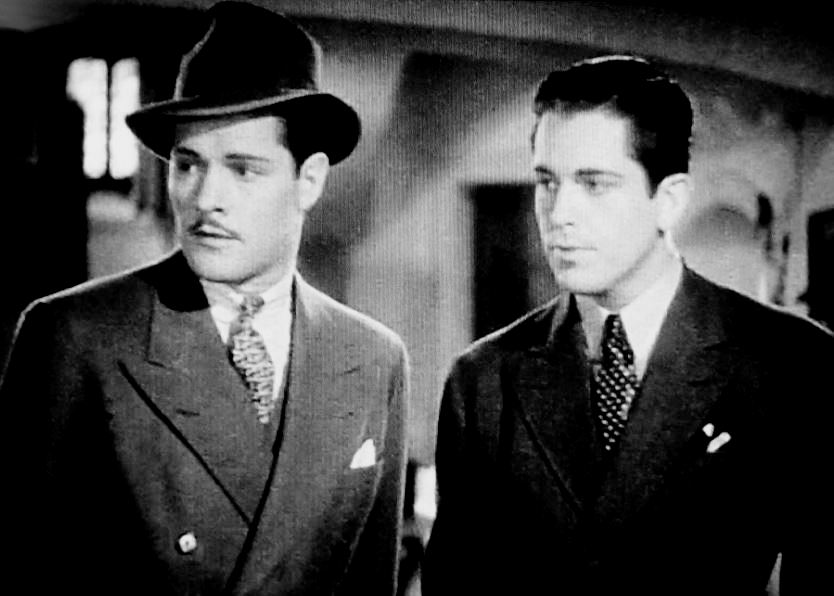
Two households, both alike in dignity, in fair Verona, where we lay our scene… well, you probably know the rest. Shakespeare's classic tale of star-crossed love is brought quite magnificently to life by director Franco Zeffirelli. This is renowned as being the first screen version to have age-appropriate actors (teenagers) in the lead roles—unless you count the musical WEST SIDE STORY with leads in their early 20s). The only other film version I've seen is the 1936 movie with Norma Shearer (in her 30s as the 13-year old Juliet) and the over-40 Leslie Howard as her lover Romeo. Shearer and Howard are fine, but with actors of that age, the impact of the story is different. The tragedy of young people in the blush of first love, stymied by their elders and their social structure, is blunted with full-fledged adults as the central figures. Here, youth fairly glistens on the skin of Olivia Hussey (at 15 playing Juliet) and Leonard Whiting (17 playing Romeo), and it certainly doesn't hurt that both are quite beautiful. Considering they were unknowns at the time with few screen credits, they are remarkably good both at filling out their characters and at handling the Shakespearean speech rhythms. The rest of the cast is not exactly star-filled—aside from Michael York as Tybalt, Robert Stephens as the prince, and Milo O'Shea as the friar (all three very good), I was not familiar with anyone else, though Pat Heywood does a very nice job balancing comedy and drama as Juliet's nurse. York plays against type as a villain with his face made up so much—mostly with eyeliner, I think—that I didn't recognize him at first.

For all the differences in casting, this plays out very much like the 1936 version, and even the sets look similar. The Montagues and the Capulets are feuding families in Verona; when the young bucks go traipsing through town and meet up with each other, fights ensue, even though the Prince has decreed they must end their public enmity. Restless Romeo, a Montague who tends to keep to himself, sees Juliet from afar at the Capulets' ball and is immediately smitten. So is she, and the famous balcony scene cements their attraction. But Juliet is getting on in years—she is described as being a fortnight away from 14—so she is promised in marriage to Paris. Instead, she and Romeo sneak away and get married by the sympathetic Friar Laurence. Unfortunately, there is further strife in the streets between the families and during a brawl, Romeo's buddy Mercutio is killed by the hot-headed Capulet Tybalt; Romeo kills Tybalt, then flees. With Romeo being hunted down and Juliet about to marry Paris, a happy ending is not in store for our young lovers.

The movie, well done as it is, is aided immeasurably by a great score by Nino Rota who later did a similarly great score for THE GODFATHER. The main theme became a pop hit in an instrumental arrangement by Henry Mancini under the title "A Time for Us" and was also sung by Andy Williams with lyrics that turned it into a West Side Story-type song ("A time for us/Someday there'll be/When chains are torn/By courage born/Of a love that’s free"). In the movie, it's heard instrumentally throughout, but is sung at the ball where Romeo and Juliet first meet by Italian pop singer Bruno Filippini (pictured at left) as "What is a Youth" with lyrics that resonate more strongly with the theme of youth and age: "What is a youth?/Impetuous fire/What is a maid?/Ice and desire/The world wags on/A rose will bloom/It then will fade/So does a youth." I found this scene quite effective: the lyrics, the handsomeness and glowing youth of the singer, and of course, the shy flirting of Romeo and Juliet during the dance. Though I've been told I should see the Leonardo DiCaprio version, I can't imagine anyone else getting this as right as Zeffirelli and his cast did. [DVD]

Tuesday, July 05, 2016

REMOTE CONTROL (1930)

William Judd Brennan (William Haines) is a wisecracking fellow who works at a music store and has dreams of becoming a radio host. Brennan flirts obnoxiously with Marion (Mary Doran), a customer, and winds up following her to her place of business which happens to be radio station WPN where the big boss is her brother Sam (Robert King), who just happens to be an old friend of William's. The station is losing ratings and Sam hires William to help come up with some new programming. How cozy—except Marion still can't stand the perpetually insufferable William. One of the people William hires for his new show is clairvoyant Dr. Kruger (John Miljan) who is actually the head of a group of small-time crooks known as the Ghost Gang; as he performs readings for people over the air, he is actually sending coded messages to his gang to aid in pulling off their robberies. Kruger also starts dating Marion, which causes William no end of irritation. When the gang hits a group of socialites gathered at the radio station, William figures out that Kruger is behind it, so Kruger kidnaps him and makes it look like William is actually the criminal mastermind. Can William escape before the crooks launch another crime during which they plan to eliminate him for good?

I’ve reviewed other William Haines movies before; he was a popular silent comic actor who had the persona of the eternal juvenile, always joking, always assuming he could win anyone over with his charm. But in sound films, his "charm" comes across more often as unpleasant arrogance. Today's viewer may also note a touch of camp in his over-the-top jesting, though his characters were apparently to be read as 100% heterosexual. Here, he has absolutely zero chemistry with Mary Doran—to be fair, part of the problem is Doran who gives a frowning, low-energy performance opposite Haines' grinning, bouncing off the walls style. In terms of plot, I don't think it's ever explained why the gang has to rely on radio messages—why couldn't Kruger just deliver his orders in person? As with some early sound films, there are a handful of dialogue flubs left in, but otherwise the technical aspects of the film are satisfactory. The stuttering comedian Roscoe Ates has a couple of bits that are the high points of the film. If stutterers and prancing ninnies aren't your cup of tea, you may want to skip this. [TCM]

Friday, July 01, 2016

MOZAMBIQUE (1964)

A cocky but blacklisted pilot (Steve Cochran) gets in a barfight in Madrid. Instead of being jailed, however, police detective Paul Hubschmid arranges for him to get a job in Mozambique for a businessman named Valdez. By the time Cochran gets there, Valdez is dead and Cochran has to deal with Valdez's widow (Hildegarde Knef) and two of his underlings (Martin Benson and Dietmar Schonherr) who all seem engaged in a power struggle. Valdez had a lot of money in Swiss bank accounts, but the paperwork is missing so everything is up in the air. Cochran isn't sure who he can trust, but he winds up piloting a small plane that he soon discovers is involved in drug smuggling. He also gets close to the lovely Vivi Bach, a singer at Valdez's nightclub, and helps her out when she discovers part of her job is to be a sex slave to a wealthy Arab sheik. Cochran, along with Schonherr, rather improbably flies in and helps Bach escape, but while Cochran and Bach get in a little skinny-dipping and canoodling in a river in the middle of nowhere, Schonherr is murdered in the plane. When Hubschmid, the Madrid cop, shows up in Mozambique, Cochran realizes that there is more at stake here than he's known.

Steve Cochran was a solid B-lead antihero in noir and crime movies of the 50s (PRIVATE HELL 36, HIGHWAY 301, but by the 60s he was moving toward the world-weary good-guy end of the spectrum (OF LOVE AND DESIRE). Cochran died at 48 less than a year after filming this movie, and it's hard to say where his career would have gone—he was doing more television than film at this point but he surely still had some good years left. In this film, he showed he could be tough, sensitive, grungily sexy and morally conflicted, even if he might never again have been in an A-movie. This film occasionally has the feel of a low-budget European spy film, what with the exotic settings, the eye-candy women, and the fairly exciting climax, set at Victoria Falls. Cochran (pictured above with Bach) carries the film over some loose plot points, and he gets help from a decent supporting cast, especially Knef, Hubschmid and Schonherr. Even Bach, who doesn't have much to do (even though she's on screen more than Knef) is OK—and she married Schonherr the next year. The movie could do with a little more humor or wit, and there is a bizarre "killer dwarf" plot twist that comes out of nowhere, and goes right back there again. But overall, watchable, especially as a relic of the international intrigue genre of the 1960s. [DVD]

Wednesday, June 29, 2016

COBRA WOMAN (1944)

On Harbour Island in the South Seas, the lovely maiden Tollea (Maria Montez), who is about to marry Ramu (Jon Hall), is kidnapped by the mute Hava (Lon Chaney Jr.) and taken off to nearby Cobra Island. It turns out that Tollea was born on Cobra Island, the twin sister of the wicked queen Naja (also Montez), but was more or less accidentally brought over to Harbour Island by the Scottish sailor MacDonald when he was shipwrecked on Cobra Island and escaped torture. Tollea's grandmother (Mary Nash) has had her brought back with the intention of putting her on the throne to replace Naja, but Naja and her protector Martok may have something to say about that. Meanwhile, Ramu and his buddy Kado (Sabu) travel to Cobra Island to save Tollea, but wind up potential sacrifices to the island's volcano god.

Of all the six exotic adventures that Jon Hall and Maria Montez made together in the 1940s, this is the one that has lasted, mostly because of its reputation as a camp classic. I first saw this film in a theater as part of a classic movie series and I had great fun cheering and laughing with hundreds of other viewers, and joining in on an audience chant when Montez does her notorious cobra dance. I think it's that dance that has kept this movie alive all these years, because overall, the film is no worse or better than ALI BABA AND THE SEVEN THIEVES or ARABIAN NIGHTS. As a B-adventure film of its era, for turning off your mind and enjoying, it's par for the course, its chief advantage being that it was filmed in Technicolor. Montez looks good in her costumes, the sets are effective, the color is fabulous, and Sabu is always fun to have around. Hall and Montez were strictly B-talent, appropriate for a strictly B-movie, though I did keep wishing that someone with a little more range was playing the dual good queen/bad queen role. Even though Hall is regarded as the era's best B-beefcake, I've never really been a fan—he's a smidge too lumpy for me, like Johnny Weissmuller in his later Tarzan movies. But this is still a must-see for movie buffs. Maybe the strangest thing in the movie is seeing Mary Nash, known best for playing Katharine Hepburn's slightly scatterbrained upper-crust mother in THE PHILADELPHIA STORY, slumming here as Montez's grandmother. [DVD]

Thursday, June 23, 2016

FAST WORKERS (1933)

John Gilbert and Robert Armstrong (pictured at left) are skyscraper construction workers, roommates and buddies who prank each other over women but also look out for each other. One night, Gilbert is arrested in a barroom brawl and Armstrong goes home with Mae Clarke, a shady lady who, unknown to Armstrong, has slept with Gilbert. Armstrong gets serious about Clarke and proposes marriage. When Gilbert gets wind of this, he's sure that Clarke, whom he thinks of as not much more than a whore, is out to fleece his buddy so he has a plan: he gets Clarke to take a weekend trip with him to Atlantic City and takes pictures of them being flirty, then arranges for Armstrong to find them, hoping to discourage his friend's wedding plans. But Gilbert doesn't know that Armstrong has already secretly married Clarke. When Armstrong discovers what's going on, he sets up a trap at the high-rise construction site to have Gilbert lose his footing and fall to his death. Will the plan work? And is Clarke really the gold-digger that Gilbert thinks she is?

This pre-code melodrama was, I believe, the last movie Gilbert made under contract to MGM, though Garbo insisted on having his co-star in QUEEN CHRISTINA later that year. Even at his weakest, Gilbert was worth watching, and he's actually in fairly good shape here as a cocky playboy, and Armstrong makes a good foil as his salt-of-the-earth friend. As others have noted, this isn't really a romance as much as a tale of male bonding, or bromance (which the ending makes quite clear), and though Clarke is good, she's almost wiped off the screen not only by the chemistry between the buddies but also because the best scenes in the movie are the ones with the construction workers hanging out together at dangerous heights. The shift in tones is interesting—from buddy comedy to romance to near-tragedy. Sterling Holloway and Vince Barnett are in the supporting cast, and there's a clip of Joan Crawford in LAUGHING SINNERS which we see when Armstrong and Clarke go to the movies. Directed by—though not credited to—Tod Browning, his first movie after the scandal of FREAKS. [TCM]

Wednesday, June 22, 2016

WEE WILLIE WINKIE (1937)

In 1897, young Priscilla (Shirely Temple) and her widowed mother Joyce (June Lang) leave their impoverished life in England to live with Priscilla's grandfather (C. Aubrey Smith), a colonel in a Scottish regiment in Northern India. Life on the military compound is not easy, but Priscilla, with her smile and joyful outlook, manages to charm almost everyone: a young and handsome lieutenant whom she nicknames Coppy (Michael Whalen) and who nicknames her Wee Willie Winkie from the Kipling poem, the gruff Sgt. MacDuff (Victor McLaglen) who lets her participate in military exercises, and even Khoda Kahn (Cesar Romero), the leader of a group of Indian rebels who have been stealing weapons in anticipation of an uprising. Kahn, who is being held in jail, escapes during a raid on the arsenal, his escape made possible because house servant Mohammet Din (Willie Fung) smuggled in information to Kahn using little Priscilla as a unwitting messenger. During the fracas, MacDuff is fatally injured, and he dies listening to Priscilla sing "Auld Lang Syne" at his bedside. Eventually, Joyce decides the situation has become too dangerous and decides to go back to England, but Priscilla makes a last-ditch attempt at bringing the two sides together through negotiations by sneaking away with Mohammet Din and meeting with Khoda Kahn. Can this 9-year-old girl succeed in ending the bloodshed between two sides with seemingly intractable conflicts? Of course she can; she's Shirley Temple!

The Temple movies I've seen (including HEIDI and BRIGHT EYES) have tended to be less sappy and melodramatic than their reputations would indicate (except for THE LITTLE PRINCESS). This one teeters occasionally but generally avoids too much cuteness and tear-jerking (except, of course, for McLaglen's death scene). Temple and McLaglen are very good, as is Romero. Lang is colorless, and Whalen, who becomes Lang's love interest, looks and sometimes acts rather suspicious, though ultimately he's a straight arrow. Directed by John Ford, who may be responsible for the fact that sentiment doesn't overwhelm the story. [TCM]

Monday, June 20, 2016

THE ENDLESS SUMMER (1966)

This is one of the first films to break out of the commercial doldrums of the documentary genre to become widely popular with film audiences. Unfortunately, it's not a great film, and time has not been kind to its patronizing views of women and native peoples. Director Bruce Brown, a surfer himself, follows two surfers, Robert August and Mike Hynson, on their trek to experience an endless summer by jetting the globe and surfing wherever they can. The two visit (moving eastward from the United States) Senegal, Ghana, South Africa, Australia, and New Zealand. In Africa, they find at least one beach with good surf where they become the first people ever to ride the waves. Also in Africa, they (or at last Brown, the narrator) take a rather backward attitude to the natives who are friendly but, to them, hopelessly primitive. They treat the village children and adults pretty much all as children--it's "cute" when they can't quite fathom how to surf. The boys also complain about how much it costs to stay at local hotels and how difficult it can be to gain access to good surf. There is less of this as the journey progresses, though Brown also expresses amazement that women can surf--to be fair, not many did back then. The photography is lovely throughout, and occasionally the trip is interrupted by "flashbacks" to Hawaii. I'm not a surfer and am not especially interested in the sport except insofar as I get to see well-built young men in swimming trunks, though even I was amazed at the risks these guys and their fellow surfers take sometimes. The film is entertaining and fast-moving enough, though the lack of actual recorded sound on location means the only voice we here is Brown's narrating after the fact, and he is, on balance, likably laid-back. Interesting for one visit, though I don't I imagine I'd re-watch this. But I wouldn't mind seeing seeing a current-day take on this subject. [DVD]

Wednesday, June 15, 2016

BORDERTOWN (1935)

In the Mexican quarter of Los Angeles, Johnny Ramirez (Paul Muni) graduates from the Pacific Night Law School and is singled out for praise for overcoming bad circumstances to become a success. But when he goes into business, he winds up essentially donating his time to his impoverished clients. When he represents a food vendor in court who is trying to get the wealthy socialite Dale Elwell (Margaret Lindsay) to pay for damage to his vehicle, Johnny's cockiness and inexperience get him into trouble; Dale is found not liable—even though we know her recklessness caused the accident—and Johnny is disbarred. Disillusioned, he takes off, leaving his poor mother behind, and becomes a bouncer in a bordertown saloon. He gets in good with the boss and winds up becoming a business partner. Soon, the owner's young wife Marie (Bette Davis) takes a shine to Johnny, but he turns her away. Frustrated, Marie leaves her drunken husband in his car and closes the garage door, ensuring his death.  She hopes this will snag her Johnny, but she's wrong, as Johnny, who is now business manager and is rebuilding the saloon into a fancy casino, has reconnected with the socialite Dale, who thinks of Johnny as her "savage." Marie makes trouble by claiming that Johnny was behind her husband's death, but on the witness stand, Marie has a breakdown.

This is a melodrama of jealousy, class (and race) conflict, and assimilation, which, with only a few tweaks, could probably be remade today and seem timely. Though Bette Davis is second billed, she's actually absent from much of the movie, though her courtroom scene is a standout moment, and this is Paul Muni's movie all the way. He does a good job as the Mexican-American who tries to assimilate the way he's taught he should, and when that doesn't work, takes a different path to the American Dream. In the end, he decides to return to his own "tribe," in the words of the socialite, which is not quite the ending I expected. Davis is quite good, as are Lindsay and Eugene Pallette as Davis' husband, in a role far from the comic parts he's probably more known for (the father in MY MAN GODFREY, Friar Tuck in THE ADVENTURES OF ROBIN HOOD). I'm not a Muni fan but I would recommend this one. [DVD]

Monday, June 13, 2016

THE NEXT OF KIN (1942)

During World War II, British intelligence learns that the Germans are massing a submarine fleet at the coastal town of Norville, a small town in occupied France, and the British military begin planning a commando raid. Security agent Richards (Reginald Tate) is upset by the loose talk he hears and he tries to amp up awareness among the soldiers who will soon be going to Watercombe to launch their attack upon Norville. They basically get a "loose lips sink ships" lecture and are sent on their way. Unfortunately, not everyone gets the message. We see a private named Jimmy go backstage to visit his stripper friend where he innocently lets it slip that his squadron is going to Watercombe on an important mission; he tells her that hoping that she'll meet up with him there, but we discover that she's working with her dresser, known only as Ma, who is actually a Nazi spy, and soon Berlin knows there's something afoot. Germany sends a spy known as Mister Davis and/or Number 23 (Mervyn Johns) who makes contact with a bookseller named Barratt (Stephen Murray) and together they work on figuring out the logistics of the coming British raid. They get help from a young Dutch woman who works at the bookstore by threatening the lives her parents back home; she tries to get information from her boyfriend, a private named Johnny. Number 23 also insinuates himself into the community and picks up tidbits of loose talk here and there. Ultimately, a briefcase containing maps of the raid are stolen by the Nazis, and though the commando raid is successful, many men die because of the security slip-ups.

This British wartime propaganda film is labeled "a military training film" right on its title card, but was released as a full-length feature film, and despite some occasional didactic teaching moments, mostly early on, it is a solid spy film well worth seeing. Though not exactly gritty in its realism, it does have some surprising moments for a 40s movie: there are occasional mild curse words; at one point, Number 23 is seen looking at a photo book with a naked woman boldly displayed on the cover; the stripper is a drug user and her addiction is what keeps her tied to her Nazi spymaster; the final fifteen minutes is mostly composed of well-shot battle scenes which incorporate small bits of actual battlefield footage. Johns (Bob Cratchit in the 1951 Christmas Carol) does a nice job playing against type as the chief bad guy—and somewhat surprisingly, he escapes justice in the end, remaining free to keep eavesdropping on British citizens. The characters can't be said to be well-rounded (see Private Jimmy and Private Johnny), but they are made individual enough so that we can follow their plotlines and have a little something invested in their fates. A little gem of propaganda filmmaking, directed by Thorold Dickinson. [YouTube]

Thursday, June 09, 2016

THE NAKED MAJA (1958)

This biopic of the artist Francisco Goya (Anthony Franciosa) is set in 17th century Spain in the context of two social upheavals: the Spanish Inquisition and the rule of Napoleon. We first see Goya (called Paco by his friends) in the streets of Madrid with his friend José watching the procession of an Inquisition victim about to be burned. Watching from a more exalted place is Maria, the Duchess of Alba (Ava Gardner), disapproved of at court for her slumming activities. Both are disgusted by the spectacle, and later after the drunken José gets into a fight with Maria's bodyguard, Goya is slashed with a knife and Maria tends to him. When Goya gets a commission to paint a mural on the ceiling of the basilica, he paints common people instead of a traditional holy scene which causes some controversy, though it also cements Maria's admiration for him. They have an on-and-off affair, complicated by the machinations of Prime Minister Goday whom the common folk dislike because (if I followed the story correctly), he is seen as a collaborator with Napoleon. There is a brouhaha over a painting of Goya's, the Naked Maja of the title, because it is a graphic female nude—and not presented as a mythological figure but as a sensuous woman—and it is assumed to be a portrait of the Duchess of Alba. Maria is sent into exile, Goya is arrested by the Inquisition and, naturally, there is not a happy ending for the beleaguered pair. Apparently this film contains more fiction than the average Hollywood biography. It looks good, with sumptuous sets and lots of purple, though some of the dubbing—it was filmed in Italy with mostly Italian actors—is terrible. Individually, Franciosa and Gardner are fine, but they don't work up much heat together. Most critics trash this film but I couldn't really work up enough outrage to go that far. It's bland but generally watchable. [TCM]

Wednesday, June 08, 2016

MIDNIGHT SHADOW (1939)

Prince Alihabad, a turban-wearing mystic, has come to perform in a small Oklahoma town, staying at the home of the respectable Mr. & Mrs. Wilson and their 20-something daughter Margaret who has become enamored with the prince, much to the annoyance of her boyfriend Buster. Mr. Wilson owns oil-rich land in Texas which he plans to give to Margaret; when he tells the prince this, we see that Buster is also listening in, as is a figure outside in the dark. Alihabad tries to talk Margaret into eloping with him, but at the last minute, she decides not to. That night, we see someone sneak into the Wilsons' bedroom, dose them with something to keep them asleep, and steal the deed to the oil well. The next morning, Mr. Wilson is found dead—the sleeping potion hurt his weak heart—and the police are on the case. Tagging along is Junior Lingley, a bumbling detective wannabe who dresses up occasionally as Sherlock Holmes, and his slightly less bungling buddy Lightfoot.

This is one of those "race films" of the 30s and 40s with an all-black cast, produced by an independent company on a budget lower even than the Poverty-Row Hollywood films of the era. In that context, this is a decent little mystery, even with the following strikes against it: some truly terrible, amateurish acting (especially from Florence Redd as Margaret); cheap looking sets; a badly plotted mystery story (the culprit is a character we don't really know); and poor editing. But if a viewer can get past all that, there are some pluses: the mystery is interesting before it gets muddled, some of the dialogue is fun—when a police sergeant is criticized for not thinking enough about a clue, he replies, "Lady, I'm not paid to think—our job is finding out"; Richard Bates (think Jimmie Walker) as the bumbling Lingely is a bad actor but still gets a few laughs especially in his Sherlock Holmes deerstalker and with his obsession with fingerprints; two actors do fine jobs: Buck Woods as Lightfoot and John Criner as the prince. Also acting like pros are Jesse Lee Brooks as a cop, Ollie Ann Robinson as Mrs. Wilson, and Ruby Dandridge (mother of Dorothy Dandridge) as Lingely's mother. The bad guy is caught, but the conclusion is strangely inconclusive in a number of ways. Still, I'm not sorry to have caught this rarity on Turner Classic Movies. Pictured are Buck Woods and Richard Bates. [TCM]

Thursday, June 02, 2016

SWISS FAMILY ROBINSON (1940)

During the unsettled times of the Napoleonic wars, William Robinson (Thomas Mitchell), a Swiss watchmaker who lives in London, decides to move his family out of harm's way to Australia. His wife Elizabeth (Edna Best) is not happy about it, nor are her sons: foppish Jack (Freddie Bartholomew), bookworm Ernest (Terry Kilburn), and cocky would-be soldier Fritz (Tim Holt), nicknamed "Fisticuffs" by Jack (toddler Francis, the fourth son, has no opinion). William is not especially happy with the way his sons are developing and says he hopes to train them to create, not destroy. On the way to Australia, the ship they're on runs into a major storm. The crew is washed overboard but the Robinsons survive and the wreck drifts close to a deserted island where they drag the few provisions they can and try to survive. Father rallies the dispirited family and together they build a treehouse and slowly adapt to their new life, but tensions rise when Elizabeth realizes that, while the sons remain on the lookout for passing ships to rescue them, William is more than ready to stay put—he believes their trials and tribulations are part of God's plan for them.

This is not the Disney version of the Johann Wyss novel with which most of us are familiar. In addition to being shot in a studio rather than on location, and having a lower budget, this is also a little grittier and darker, probably closer to the novel—though it's been over forty years since I read it back in school. It is also difficult to see since Disney bought the rights to the RKO film back in 1960 when they produced their version and it apparently has never had a legitimate home video release. The print I saw on YouTube is murky and a bit splicy, but clear enough to show that it deserves a restored DVD release. This is not a larky boy's adventure like the Disney film but a more serious coming-of-age story in which the focus is on how the three sons change during their time on the island. All three actors playing the boys (pictured above from left: Kilburn, Holt, Bartholomew) are quite good, especially Tim Holt. The film was nominated for a special effects Oscar and, though not in the same league as the Disney film in terms of production values, the storms in particular are quite effective, as is the giant spider-web cave scene. An entertaining and interesting version of the story. [YouTube]

Tuesday, May 31, 2016

TALENT SCOUT (1937)

Steve Stewart is a gung-ho talent scout for Apex Pictures whom we first see with a busful of starlets on a national tour; despite how highly Steve thinks of himself, the tour goes so badly that the big boss fires him. While stranded in a small town, Steve attends an amateur night event and discovers wholesome singer Mary Brannigan whom he hopes might be his ticket back to studio employment, so he takes her to Hollywood with him. While waiting for her screen test, she meets Raymond Crane, Apex's big romantic leading man, but doesn’t recognize him in make-up and the two do not get along. Her screen test is a disaster, but Steve has a plan: take her out on the town and have her make a splash under the name Doris Pierce. They do, she does, and soon she's under contract at Apex. She becomes a big star and Steve nurtures a crush on her, but what will he do when a fake romance between Mary and Raymond soon becomes real?

This is the rare Warner Bros. B-film of the classic era that disappoints. The production values are fine, and the lead, Donald Woods as Steve, is good, but the rest of the cast, rather than consisting of time-tested contract players, is composed mostly of newly discovered talent. Jeanne Madden (Mary), Fred Lawrence (Raymond), and Rosalind Marquis (Raymond’s jealous leading lady Bernice) were all out of the movie acting game by 1939. They’re not bad—Lawrence is the most promising of the three—but they don't stand out in any way. Storywise, it's hard to see what Steve is supposed to see in Mary, whose singing is pleasant but whose stage presence is amateurish in the beginning, and doesn't get that much better. It's watchable, but at only 62 minutes, it began wearing out its welcome around the 45-minute mark. Pictured are Woods and Lawrence. [TCM]

Thursday, May 26, 2016

DEMETRIUS AND THE GLADIATORS (1954)

This Christian epic is a sequel to THE ROBE, beginning exactly where the first movie ended, even to the point of including a scene from the end of that movie as the opening scene here, but you don't need to know that film to follow this one, set not long after the crucifixion of Jesus. The emperor Caligula, hearing Christians refer to achieving eternal life through Christ, thinks if he can get his hands on the robe that Jesus wore before he died, he will be able to bring the dead back to life and live forever. Demetrius, entrusted with the robe by the apostle Peter, manages to hide it at the home of young Lucia before he is dragged off by Praetorian Guards and, unable to prove that he is a free man and not a slave, is sentenced to the gladiator arena. Meanwhile, Claudius' notoriously unfaithful wife Messalina becomes fascinated with Demetrius, who refuses to fight to the death as it's against Christ's teachings. He earns the crowd's favor when he refuses to kill Glycon, a Nubian slave who befriended him, but Caligula unleashes man-killing tigers on him. He manages to kill them all as Messalina watches in a state of sexual arousal. Demetrius is made a palace guard and Messalina tries unsuccessfully to seduce him. But when young Lucia comes to visit, she is manhandled by the gladiators and just as one of them is about to rape her, she dies in his arms. This turns Demetrius against God and he gives in to Messalina's advances—until he finds out that Lucia is not dead but hidden away in a catatonic state, being cared for by Peter.

This was filmed on the expensive sets for THE ROBE and looks great. The director, Delmer Daves, takes DeMille's lessons to heart and uses a fair amount of sex and violence to get his message across. I'm not a fan of Victor Mature, who plays Demetrius as he did in THE ROBE, but I do like Susan Hayward who does a nice job as Messalina—she is able to flesh out her character a bit beyond the usual Biblical femme fatale. Two other actors from THE ROBE also appear: Michael Rennie as Peter, who only has a few scenes, and Jay Robinson as Caligula, who once again conveys the character's full-tilt batshit manner mostly by shouting his lines with an effeminate edge. Ernest Borgnine (pictured) is the gladiator teacher and Debra Paget is Lucia. Anne Bancroft is in it as well, but I didn’t recognize her at all. This is shorter than THE ROBE and moves at a nice pace, and builds well to its climax. [TCM]

Tuesday, May 24, 2016

THE DEVIL'S HAND (1961)

Robert Alda tells his fiancée (Ariadna Welter) that he's been plagued by creepy dreams of a dancing blonde woman. Once he is even compelled to get up in the middle of the night and head to a nearby curio store where he sees a doll with the dream woman's face. In the daylight, Alda and Welter stop by the shop, run by dollmaker Neil Hamilton, and find the doll on the shelf, near a doll that looks remarkably like Welter. It turns out that Hamilton is the leader of a Satanic voodoo cult that meets in the back of the shop—they worship a demon named Gamba—and when he sticks a pin in the Welter doll, she collapses in pain and winds up in an extended hospital stay, leaving Alda free to be seduced by Linda Christian, the real-life cult member from Alda's dreams. (Why the cult goes through such convolutions to snag the drab, passive, out-of-work Alda for their ranks is never explained. We also never see what the Satanists get out of their worship, and their rituals are not especially creepy.) When the cult snatches Welter to be sacrificed, will Alda manage to break free of their influence and save her? This is a pretty drab B-flick with little to recommend it. Alda is a personality-free leading man and Welter pretty much matches him in that department. Hamilton, an old pro from the classic era (and Commissioner Gordon on TVs Batman), acquits himself nicely, though I'm sure he wishes he were somewhere else. The low-budget sets make this film look like a cheap TV episode. The plot is OK but someone should have expended some effort into giving the cult more background and giving the characters more personality. Skip it. [DVD]

Friday, May 20, 2016

THE 13TH LETTER (1951)

In a small Canadian town, young Dr. Pearson (Michael Rennie) is a new arrival and he has stirred up quite a bit of talk. Some patients like him for his no-nonsense manner, others think he's too brusque and cold, and many of the women think he's quite handsome and would make a nice catch as a husband or lover. Denise (Linda Darnell) fakes illnesses to get his attention; Cora (Constance Smith), the wife of older doctor Paul Laurent (Charles Boyer), boldly makes advances in his office. Pearson rebuffs them both, but Cora's sister Marie is quite put-out by Cora's behavior—even though Paul himself seems unworried. Soon, anonymous poison-pen letters which accuse people of affairs and other questionable behaviors start arriving and the stated purpose of the letters is to get Dr. Pearson, who may have a distasteful secret buried in his past, to leave town. Paul advises Pearson not to take them seriously, and soon enough Marie is held and charged with sending the letters—in addition to her anger at Cora, she holds a grudge against Dr. Pearson for his reprimanding of her care of a patient. But even after Cora is jailed, the letters continue. This is a remake of a fine French film, LE CORBEAU. The original is darker and more psychologically complex, but this version stands fairly well on its own, with an atmosphere of noir light (if that makes sense). Boyer and Rennie are the standouts; Smith is fine, but Darnell is rather bland as the primary love interest. Judith Evelyn, who I know as the deaf woman in THE TINGLER, gives a solid performance as the unlikable Marie. The best moment is when one of the letters floats down from the choir balcony during a church service. Pictured are Darnell and Rennie. [Streaming]

Wednesday, May 18, 2016

THE DAY THE SKY EXPLODED (1958)

Astronaut John McLaren is piloting the XZ, an atomic moon ship built by Americans, Russians and the British, and sent aloft from a base in Australia. McLaren is supposed to orbit the moon a few times and return, but something goes wrong and he has to jettison his cabin, sending the rocket out in space where it explodes. When he returns to Earth, strange things start happening, apparently due to the explosion: animals begin migrating away from coastlines (and even domestic pets aren't immune from taking off), balls of light appear in the sky, tidal waves go crazy, and scientists figure out that some foreign object out in space is absorbing Earth's magnetism. The culprit is a bunch of asteroids which, because of the XZ explosion, have fused together into one huge mass which is on a collision course with the earth. There's disaster and panic, and with time running out, can McLaren come up with a plan to save our planet? This Italian made B-film uses a lot of stock footage, and the human storylines don't hold the attention all that well—there's the collapse of McLaren's marriage and a tepid romance between the stodgy mathematician Katy and the moderately handsome scientist Peter (both pictured). But the plot has promise and the solution to the apocalypse is interesting. There are moments that cry out for an MST3K treatment, as when it's announced that the entire world's coastal areas can be evacuated in three days and governments can just "requisition what they need" to make that happen. The cast is a mix of Italian and Swiss actors, none of whom were familiar to me but whom were all mostly adequate. Future director Mario Bava did the cinematography. [Streaming]

Monday, May 16, 2016

I WONDER WHO'S KISSING HER NOW (1947)

Around the turn of the century (the 19th into the 20th), Joseph Howard works as a demonstrator of organs for the Tabernacle Supply Company, but he'd like to be making a living writing popular songs. He lives with his guardian, Uncle John, and John's daughter Katie who has grown up like a sister to Joe, though she has deeper feelings for him than he notices. Joe takes Katie to see vaudeville songstress Lulu Madison perform his song, "Hello, My Baby (Hello, My Ragtime Gal)" but is upset when he realizes that the song, which is a hit, has been published under Lulu's name. Katie is then upset when Joe and Lulu iron out their differences and he goes on the road with her as a pianist. Soon Katie shows up on the road, claiming that Uncle John has died and she needs a job, so she's hired as a backstage assistant. But as any astute viewer will figure out, John isn't really dead, Katie's just jealous. And so it goes until Joe and Katie break out in their own successful act. They get a chance at a Broadway show but various jealousies lead to trouble and to Joe leaving the show, into which he has sunk all his money. He plays the sticks for a while, but in the end, discovers that his show went on and became a hit with Katie in the lead, and Joe finally gives in to Katie's advances.

Joseph Howard was a real songwriter (and the title song is presented as a tune that Joe comes up with early on but can't quite get finished) but this is an almost totally fictional version of his life. It's fairly entertaining even if the central romantic story is a little strange; though they're not related by blood, their relationship feels very much like a sibling one, so when Joe suddenly has a change of heart at the end, it feels uncomfortable, and given the constant subterfuges Katie uses to keep a hold on Joe, I wasn't rooting for the two to get together anyway. However, I liked both the actors (Mark Stevens and June Haver) very much. Reginald Gardiner injects some fun as a producer's assistant, and I liked seeing William Frawley and Gene Nelson in smaller roles. The final production number goes over the top but the others are pleasant enough. "Pleasant enough" is a good phrase to describe the whole movie, I guess. [Fox Movie Channel]

Thursday, May 12, 2016

THE BAMBOO BLONDE (1946)

This cute WWII comedy is told in flashback by Ralph Edwards, head of the Bamboo Blonde cosmetic company, as he explains his rise in the business world to a reporter. A couple years earlier, Edwards ran the Club 50 which, for some reason, was temporarily "out of bounds" to military personnel. Russell Wade, the new leader of a seasoned bomber crew, is sent by his men, as a prank, to the Club supposedly to meet them for dinner. When he gets there, the club's lovely singer (Frances Langford) hides him from the military police. After hours, the two go out on the town and the next morning, as the crew meets to ship off to the Pacific, they see Wade kissing Langford and assume the two are a hot and heavy item, though he doesn't even know her name. Overseas, the crew adopts Langford as their mascot, painting her picture on their plane and calling her the Bamboo Blonde, and soon she's a sensation in the press—with Edwards happy to fan the flames of publicity for the sake of his club. Eventually the crew is sent home for a cross-country war bond tour. Wade is excited for the chance to meet back up with Langford, but his bitchy fiancée (Jane Greer), who ignored Wade for the duration of the war, and was in fact stepping out on him even before he went overseas, puts a kink in his plans. Another possible complication: Langford thinks Wade is a corn-fed farm boy but he's actually from a rich family. Ralph Edwards, known mostly as a TV host (This is Your Life, Truth or Consequences), is top-billed here, but despite narrating, he's really a minor character. Langford—best known for appearing in Bob Hope's USO shows—and Wade are the whole show and they're perfectly fine; both are a little on the colorless side but I enjoyed being in their company for 70 minutes. Directed by Anthony Mann who went on to specialize in film noirs and westerns. [TCM]

Tuesday, May 10, 2016

JAILBREAK (1936)

This movie has a misleading title: there is a jailbreak in the last few minutes, but it's really a B-mystery set mostly in a prison. Mike Eagan is a former gangster gone legit, but he keeps getting leaned on by old crony Ed Slayden. Now Slayden is in trouble; in the course of stealing a truckload of furs, he kills a guard and is on the run. He wants Eagan to give him money to get out of town and to help hide the furs, but Eagan refuses. Slayden gives him 24 hours to change his mind. Eagan's secretary, Jane Rogers, is worried that Eagan might wind up dead, but Eagan decides to solve his dilemma his own way: he goes out and punches a cop in the face, leading to an arrest and what he assumes will be a safe 30 days in jail where Slayden can't touch him. But because of Eagan's record, the judge sentences him to two years. In the meantime, Slayden is caught and thrown in jail, the same jail where Eagan resides. And even though the warden knows about the bad blood between the two, Slayden winds up right across the aisle from Eagan. On the morning of Eagan's early release on parole, he is found shot to death in his cell. Slayden seems too obvious a suspect; could it be the prison guard who hated Eagan because of his role in his son's death years ago? Soon, the investigators discover that Eagan had let it slip that he had a lot of money stashed away—could someone who overheard him have decided to try and get the money for himself?

This is a passable B-film with a couple of flaws that stop it from being truly good. You will notice that in my summary, there is no cop, detective or hero mentioned. There actually is a cop, top-billed Barton MacLane, but he has little to do except be flummoxed and rely on the real hero, a reporter named Ken, played by Craig Reynolds. The handsome and charismatic Reynolds is always an asset to a B-film, but, like MacLane, he is ill-used here, popping in and out of the story and getting very few scenes in which he can shine. In terms of screen time and narrative, the real stars are Joe King as Eagan—he's very good in a fairly colorless role—and Dick Purcell as Slayden. June Travis (picured with Reynolds) is competent as Eagan's secretary (and mild love interest for Ken) and I liked seeing the familiar supporting faces of George E. Stone as a thug and Mary Treen as a fast-talking reporter. Interesting but needs a stronger script. Best line, spoken by someone holding a gun: "If you pick up that phone, you’re dialing the undertaker!" [TCM]

Friday, May 06, 2016

COSMO JONES, CRIME SMASHER (1943)

This one falls under the category, "I watched this so you don’t have to." The idea behind this B-film came from a radio show written and performed by Frank Graham, who plays the title role here. Cosmo Jones is a mild-mannered egghead who took a correspondence course in criminology and now fancies himself a detective. In the middle of a crime wave, two gangster groups, one led by Jake and one led by Biff, start battling each other and Cosmo winds up in the thick of things when Jake kills an underling of Biff's and dumps the body on a sidewalk where Cosmo just happens to be walking. Cosmo begs Chief Murphy (Edgar Kennedy) to let him help out; Murphy is not receptive to the idea, but Cosmo worms his way into the good graces of Sgt. Flanagan (Richard Cromwell) and is soon helping out with both the gangland war and with an investigation into the attempted kidnapping of the daughter of an oil magnate. Most critics fault Graham for this film's problems, but he's not exactly bad, he just is not very commanding—he doesn't enter the film until quite a ways in, and when he does, he's colorless and not terribly amusing. The pieced-together plot is just as much at fault as Graham is, and as usual, this Monogram outing can't sustain much tension, in part due to the lack of a background score. But there are a few meager pleasures: Mantan Moreland (pictured with Graham) manages to overcome the built-in stereotypes of the "black sidekick" role and gets a few guilt-free laughs—he is also more important to the plot than usual; Edgar Kennedy does a nice job as the often flustered police chief who refers to a cadaver as "cavier," and says early on in a speech to his men, "Elimination of crime must be stopped!" A young Gale Storm appears as a love interest for Flanagan, who really is the central character, and though Cromwell is, like Graham not terribly commanding on the screen, he at least has energy and is nice looking.  This was intended to be a series, but no sequels were made. The title on screen is COSMO JONES IN THE CRIME SMASHER. [YouTube]

Wednesday, May 04, 2016

THE BRIBE (1949)

Robert Taylor is a federal agent visiting the town of Carlota on a Central American island, hoping to break up a war surplus smuggling ring. His chief suspects are a sultry club singer (Ava Gardner) and her husband (John Hodiak), an alcoholic war vet with a heart problem who can't keep a job. Taylor himself seems to be under surveillance by a slovenly and sweaty low-life (Charles Laughton) who eventually offers him $10,000 to leave the island.  The owner of a Peruvian mine (Vincent Price) with whom Taylor arrived on the island shows up on occasion, and while Taylor is on his fishing boat, Price engineers it so Taylor takes a spill into shark-infested waters. Boat hand Emilio saves him, but Emilio winds up eaten by a shark. Emilio's father offers to help, and tells Taylor that: 1) Hodiak, Gardner and Laughton are all involved in the smuggling and 2) Price is actually the brains of the ring. Now Taylor has to struggle with his conscience as he's fallen in love with Gardner.

Film noir in look if not in details, this is a slow-moving crime tale which benefits from a mildly exotic setting and a slam-bang ending which plays out against a nighttime fireworks display. Taylor, whom I rarely find appealing, is at his most wooden and artificial here, and though Gardner tries hard, there is zero chemistry between the two. Often when the leads are inadequate, I can find some positives in the supporting cast, but not so much here. Laughton (pictured behind Gardner) is usually reliable, hamming it up if he thinks he's slumming, but here he can't even bring himself to show any real interest in his character. Price is a little better, but his role is fairly small. Hodiak, an actor I'm not crazy about, is pretty good as a guy who's basically given up on life when the movie begins, and goes downhill from there. The noir elements are mostly visual, though Gardner's character is a kind of half-hearted femme fatale. It has its moments but overall, not recommended. [TCM]

Monday, May 02, 2016

CRIME UNLIMITED (1935)

Scotland Yard is itching to get their hands on the Maddick gang, a group of jewel thieves who often use average citizens as patsies to get their hands on gems. When a policeman is found dead, clutching a piece of paper that says "Maddick B 1935 AD," the Yard becomes more determined to find this mysterious culprit who, supposedly, no one has seen. Young detective Pete Borden (Esmond Knight) poses as a thief and fakes a jewel robbery just to get into contact with the gang, and when he meets Maddick, all he sees is a shadowy figure hidden behind a bright light, playing chess and communicating through an intercom. Pete becomes an accepted gang member, hits it off with fellow thief Natacha (Lilli Palmer), and begins leaking information to his fellow policemen, but soon Meddick becomes suspicious and lays a trap for Pete, which leads both Pete and Natacha into trouble.

This is a "quota quickie" a British B-movie produced to satisfy the requirement that a certain percentage of films shown in England be homegrown. This is not one of the stronger ones, though it has its moments. The best elements are its lead actors: Knight, who went onto have a long career as a supporting actor, is handsome and personable, and the German Palmer, in her first English language film, is just as good. There is a clever gimmick in which Knight, stashed away in an apartment by the gang, gets information out to his fellow cops by opening his window shade and mouthing his words to a lip-reading cop across the street to "read" (pictured). The scenes of Knight's meetings with Meddick are atmospheric, though the revelation Meddick's identity is anti-climactic. Much of the narrative feels disjointed, and scenes that could be suspenseful are abruptly cut off or just end in an awkward fade. But there are pleasures to be had, and at 70 minutes, it moves quickly. [TCM]

Friday, April 29, 2016

THE LOST CITY (1935 serial)

It's serial time again, kids! This one starts with hunky scientist Bruce Gordon (Kane Richmond) trying to find the source of a slew of natural disasters (electrical storms, floods, etc.) around the world. He finds strange magnetic disorders coming from the middle of Africa and he and his pal Jerry (Eddie Fetherston) go off to investigate. In Africa, the natives who live in the village where the slave traders Butterfield and Andrews operate are attacked by giants and hauled off to the Magnetic Mountain where, in something called the Lost City (not a city so much as a small compound), they becomes subjects in the experiments of Dr. Manyus whose Expanding Ray turns the slaves into brain-addled giants. Manyus and his daughter Natcha (Claudia Dell) are being held by the evil Zolok (William 'Stage' Boyd) who wants to collect an army of giants and take over the world—I assume, as we never really get an explanation of how he plans to benefit from the ray. Zolok also plans to wrest control of Manyus's Freezing Ray and a formula that turns the black natives into white people (!!). The cast of characters includes another slave trader named Ben Ali; Queen Rama, ruler of the Spider Men (that is, men who sacrifice other men to their Spider God); Hugo (Sam Baker), the main giant; and the skimpily-clad muscle lad Appollyn (Jerry Frank) who spends the whole movie roaming the jungle at the bidding of Zolok but not really having much to do with the plot—though because Zolok can see Appollyn on a TV screen, a title card at the beginning of a chapter says, "While Zolok televisions frantically…"

This was apparently one of the more financially successful serials, and much of it is indeed fun. But there is a deadly imbalance in the narrative—the first four chapters have quite a lot going on, much of it in the fairly cool Lost City, but the middle chapters, set mostly in the jungle, bog down in routine and repetitious action as good guys keep getting captured by bad guys, escape, and get captured again. Richmond makes for a fairly solid hero; many viewers think Boyd makes a good, over-the-top villain, but I find him generally a little too low-energy until the final chapter—he spends most of the middle chapters sitting at his desk "televisioning" with Appollyn. And speaking of Appollyn, I looked forward to his appearances, not just because of his solid build and fabulous costume, but because as an actor, Jerry Frank seemed to be enjoying himself. Fetherston is also reliably good, though Dell seems out of her depth (I did get pleasure out of a scene in the last chapter in which she draws the word “cruel” out to five syllables).

Some highlights: the Tunnel of Flame; the Lion Pit;  the art deco city sets; George "Gabby" Hayes as Butterfield, who goes from bad to good to bad, etc.; the delightful Appollyn; the Enlarging Ray effect; and Sam Baker as the giant Hugo who, roughly once a chapter, puffs himself up, gets a horrible grimace on his face, lets out a dreadful scream, and grabs some victim by the neck—he really is pretty scary. Some minuses: as noted above, most of the acting is only so-so; the fistfights are lackadaisical, as the men basically throw their arms at each other, clearly not making contact, like little kids play-fighting; chapter 6 is almost entirely recap material; Queen Rama is a character they introduced but then couldn’t think of much to do with. Of course, the casual racist attitudes about the natives will rankle viewers, but that is part and parcel of films of the era. Overall, despite the many weaknesses, one of the better serials. The black & white photo is of Richmond, Dell and Fetherston; the tinted still features Frank (in his Tarzan-like togs) to the left of Boyd.  [DVD]

Thursday, April 28, 2016

EVERYBODY SING (1938)

Judy Garland, just months before THE WIZARD OF OZ, stars in this annoying and tedious waste of good talent and a potentially interesting plot. The film revolves around the eccentric Bellaire family; the father (Reginald Owen) is a playwright, formerly rich but now down on his luck, and the mother (Billie Burke) is an actress. They have two daughters (Lynne Carver and Judy Garland), a maid (legendary Ziegfeld Follies perfomer Fanny Brice), and a cook (Allan Jones) who sings nights at a café. Also hanging around is Reginald Gardiner, Burke’s protégé and possibly her lover, though since this is an MGM family movie, that avenue is not explored. Garland has just been expelled from an arts school for "updating" Mendelssohn into swing mode, and the plot, once it kicks in and deadens any audience interest, involves Garland trying to help her struggling family by becoming a pop singer. The café owner puts up money for a musical show starring Jones, and he gives Garland a part, with Brice and Gardiner helping out. There is one cute number, "Down on Melody Farm," and Brice does one of her Baby Snooks bits which helped make her famous. Garland does two swing songs and an ill-advised blackface number. Owen and Burke, both of whom are usually favorites of mine, seem shrill and arificical, like they were both fed uppers before their scenes. Monty Woolley has a small role early on as a producer. The template for this is screwball comedy, what with the once-rich family, the assorted odd characters, and the romance—Carver is in love with Jones—but it just doesn't come together. I will say that Garland, Jones and Gardiner are entertaining but they're not quite enough reason to watch this half-baked musical. Pictured is the cast with Burke, Jones and Garland in the middle. [TCM]

Monday, April 25, 2016

A LETTER FOR EVIE (1946)

At a company that manufactures shirts for the military during WWII, the female employees, desperate because all the good men are at war, stuff love letters in the pockets of the shirts, particularly the shirts with big neck sizes, hoping to start a correspondence with a hunky solider. Secretary Marsha Hunt, dating her milquetoast boss (Norman Lloyd), is encouraged by her friends to write such a letter, so she does, and it winds up in the pocket of a shirt meant for big-necked, hunky and handsome John Carroll, a notorious womanizer ("Wolf" is his nickname) who tosses her letter away without reading it. But Carroll's friend (Hume Cronyn), a pint-sized mild-mannered fellow, reads the letter and decides to write back, sending a photo of Carroll in a lumberjack outfit to represent himself. What could go wrong? Well, this being a light-hearted version of Cyrano de Bergerac, things do go wrong, but in a comic fashion. When his unit gets stationed in New York, Cronyn goes to visit Hunt, falls for her, and pretends to be Carroll's buddy—which, of course, he is. Eventually Carroll gets wise to the situation and visits Hunt's apartment, sweeping her off her feet and pissing off poor Cronyn who proceeds to get drunk and disorderly before a wrap-up that finds Hunt eventually succumbing to Carroll's charms.

This is light-hearted war-romance fun for most of its running time, carried mostly by the male leads. Carroll (pictured with Hunt) is an underrated B-lead and he's very good here, giving his male chauvinist goon role enough charm so that we genuinely aren't sure whether we want him or Cronyn to win the girl. Cronyn is good too, though his character acts in rather unlikable ways in the last third of the film, when he does a very amusing drunk scene. Many film buffs like Hunt, and she's OK here, but rather run-of-the-mill; I found Pamela Britton, who plays her roomie, to be more interesting. It’s fun to see Lloyd in a non-menacing role at this point in his career when he was probably best known as the villain in Hitchcock's SABOTEUR. Spring Byington has a small role as Cronyn's mother. There are two MEET ME IN ST. LOUIS references (to the Trolley Song and the little ditty that Margaret O’Brien sings that begins, "I was drunk last night, dear mother…") but I don't know why; I guess just an MGM in-joke. [TCM]

Thursday, April 21, 2016

REMEMBER PEARL HARBOR (1942)

It's November, 1941 in the Philippines where, even as Japanese ambassadors claim to be pressing for peace in the region, spies are sending messages about a coming attack on Pearl Harbor. On an American army base in Manila, we meet Bruce Gordon (Alan Curtis), a young and handsome soldier; Lucky Smith (Don Barry), a cocky, rowdy rule-breaker; and their chubby buddy 'Portly' Porter. We're also introduced to Portly's sister Marcia (Fay McKenzie), and when a local businessman named Littlefield (whom we have seen as one of the spies) bothers her at a bar, Lucky starts a fight that demolishes the place. He is disciplined and the three are sent on a mission to find the source of a mysterious radio transmission—musical notes that are coded Japanese messages. Restless Lucky splits to get a beer and while he's gone, the other two get ambushed by the spies and Portly gets killed. Lucky, imprisoned and facing a court-martial, escapes and, when he trips across a whole nest of spies who are smuggling oil, weapons and supplies for a coming Japanese invasion, tries to redeem himself by smashing the ring.

The title of this film is a little misleading. I suspect it was intended as a routine B-spy thriller in an exotic setting—and it even had a bit of a GUNGA DIN vibe starting when it seemed like the three rowdy buddies would be going off on an adventure—but when Pearl Harbor happened, it must have been retrofitted to be sold as the first Hollywood film with ties to the bombing. It's not really about Pearl Harbor, though we do see a minute or so of Pearl Harbor newsreel footage late in the film. Our heroes, needless to say, don't break the spy ring until December 7th when it's too late. But the final battle, between a small group of Americans and a larger group of invading Japanese, is rousing enough, and Lucky does indeed sacrifice himself to save the others. I wasn't crazy about the colorless Barry who had a long career in B-westerns, but I liked Alan Curtis (pictured to the left of Barry) as the straight arrow, and Sig Ruman is fun as a Nazi posing as a Dutchman (!). As a wartime spy film, this is passable, but don't expect any real Pearl Harbor content. [Paramount Vault on YouTube]

Tuesday, April 19, 2016

MIDNIGHT LIMITED (1940)

On car #1 of the Midnight Limited from Albany to Montreal, a man who is traveling with $75,000 worth of diamonds is robbed in the dark, and when the woman in the compartment next door (Marjorie Reynolds) tries to stop the shadowy thief, he steals some important papers of hers. The crook apparently manages to get off the train, though no one actually sees him leave. The investigating detective (John King) has his suspicions about the baggage handler (Monty Collins), but he can't prove anything. A few days later, a man carrying $60,000 in cash is robbed in the same way, and this time King's partner is killed in the process, so King enlists Reynolds' aid—she's the only person who's actually seen the thief, though only briefly and in the dark. King discovers that the two previous victims had stayed at the Ritz Plaza hotel and both had made travel arrangements through the same clerk, so they lay a trap with King staying at the hotel and posing as someone traveling with a lot of dough. Will the trap work? And more importantly, will King and Reynolds realize they should be falling in love?

This is a remarkably tedious B-movie during which I fell asleep twice (and it's only an hour long); I returned to it only because I like mysteries set on trains. This is weak in almost every element: dialogue, characterization, acting, and sets. I want to cut poor John King some slack, but when the lead actor is weak, it's difficult for a film to overcome that flaw. King comes off like a very enthusiastic amateur rushing through his lines so he can get to the next scene, so to criticize him feels a bit like kicking a puppy. He eventually found a niche in Hollywood playing a character named Dusty King in the "Range Busters" series of B-Westerns. Many critics like Reynolds here, but though she is more competent, she's awfully bland.  George Cleveland should give a slam-dunk performance as a comic-relief eccentric professor who travels on the Midnight Limited—and is part of the key to the solution—but even he can't bring the film to life. The plot point involving the hotel clerk is as close to interesting as the movie ever gets, unless you count the weird moment when King sits down at a piano in an Italian diner and sings to Reynolds—the less said about that, the better. [Streaming]

Friday, April 15, 2016

THE BLUE BIRD (1940)

Mytyl (Shirley Temple) and her little brother Tyltyl (Johnny Russell) live in a small village home with their mother and woodcutter father, and some pets—a cat, a dog, and a bird. Though not perhaps poor, they have to live simply and Temple is unhappy with her lot in life and ungrateful to her parents for providing what they do have. On Christmas Eve night, the two children wake up to a old lady pounding on their door; she is the fairy Berylune who sets them on a search for the Blue Bird of Happiness. A personification of Light (Helen Ericson) leads them into the past (a graveyard), the present (the well-appointed home of Mr. and Mrs. Luxury), and the future (a heavenly land of children waiting their turn to be born) to find happiness. Mytyl's cat and dog also become human and join them on their journey, with the sneaky cat (Gale Sondergaard) trying to upset their plans and the faithful dog (Eddie Collins) providing comic relief. Ultimately, restless Mytyl gets the message that happiness can be found in your own backyard.

Although MGM's THE WIZARD OF OZ was not a huge hit upon its first release in 1939, it did get a fair amount of attention, and this movie was Fox's attempt at a brightly-colored children's fantasy extravaganza. Apparently, legendary reports that Shirley Temple was considered for the part of Dorothy in OZ are wrong, but this still feels like a bone thrown to Temple for missing out on that gem of a role. Unfortunately, what this movie shows is how hard it is to do fantasy right. Where OZ is funny, sad, whimsical, magical, and just delightful, THE BLUE BIRD is heavy-handed and gloomy, though not without its moments of nearly successful whimsy. Based on a famous symbolist play by Maurice Maeterlinck, it wears its allegorical elements much more obviously than OZ does. The physical production isn't quite up to OZ's level either, but some of the sets are effective (the forest fire, the waiting room in the sky for unborn children), and the scene where Temple's dead grandparents wake up from their eternal sleep because a loved one is thinking of them is touching. Temple is fine; the slinky Sondergaard is fun; I enjoyed Nigel Bruce and Laura Hope Crews as the Luxurys; I was less excited by Eddie Collins as the dog—his vaudeville roots show a bit too much. Unlike OZ, this is not a musical, but there are two more similarities to OZ: the film opens in black & white, and the final lesson seems to be, there's no place like home. In general, a missed opportunity to create another beloved fantasy, though the material may well stymie any attempts (the 70s remake with Elizabeth Taylor was so bad, I never finished watching it). [FXM]

Wednesday, April 13, 2016

SMARTEST GIRL IN TOWN (1936)

Ann Sothern is a gold-digging model who isn't having much luck finding a rich husband; she's casually dating a baron (Erik Rhodes), but though pleasant, he's not really very romantic. She also doesn't think much of the male models she sometimes works with—"Million dollar profiles and dollar & a quarter brains," she says. One day while on assignment on a yacht being rented out by Eric Blore, she mistakes Gene Raymond (a blond guy with, indeed, a nice profile) for a model, but he's actually the millionaire owner of the yacht and Blore is his valet. Despite being bad-mouthed by Sothern, Raymond falls for her and keeps up the subterfuge of being a model, going so far as to have Blore front a fake ad agency so he can hire Sothern to model with him. Soon, in spite of herself, Sothern starts liking Raymond, and the second half of the movie has a screwball feel to it. In a very amusing and fairly sexy scene, Raymond admits to a fear that he'll go bald, so she puts mange cure in his hair, then has to shampoo it out (pictured at left). This brings her conflicts to the forefront and she gets a little spooked. In the end, Raymond pretends he's tried to kill himself to get her once and for all.

That fake suicide plot is a little creepy, especially when he smears ketchup on his head to simulate a gunshot wound. Even creepier, she figures out what's going on when she tastes his blood. But this is generally a nice little romantic comedy, which might be said to be a forerunner of the full-fledged screwball comedy genre. Both Sothern and Raymond are fine, and both characters act in equally reprehensible ways—she's a mass of prejudices and he's a conniving trickster—so they really deserve each other. Raymond even gets to sing a song, "Will You?" which he wrote. The supporting cast comes right out of an Astaire/Rogers movie: Helen Brodrick is dry fun as Sothern's sister, Erik Rhodes does his exotic but stuffily formal playboy bit very nicely. But much of this winds up being Eric Blore's show—I think this is the biggest role I've seen him play and he makes the most of it. I also got a big kick out of a trick cigarette box of Raymond's that shoots a cigarette out right between his lips. Minor fun, and for Blore fans, a must. [TCM]

Monday, April 11, 2016

THE ATOMIC CITY (1952)

Dr. Frank Addison (Gene Barry) is a nuclear physicist who lives with his family at Los Alamos, which even after the war is a high security community. His wife Martha (Lydia Clarke) is concerned that their young son Tommy (Lee Aaker) uses the phrase, "If I grow up…" instead of "When I grow up…" and is frustrated about living at Los Alamos. One day during a school field trip in nearby Santa Fe, Tommy vanishes. The frantic teacher contacts Frank who tells her that he picked the boy up and forgot to tell her, but actually Tommy's been kidnapped by someone who wants Frank to deliver atom bomb secrets in exchange for their boy. Even though he's been told not to tell authorities, their friend Russ (Michael Moore) gets suspicious and soon the FBI snags Frank who was about to sneak some useless, outdated information out to the kidnappers. The agent in charge (Milburn Stone) agrees to the plan; the drop is made and the man who picks up the papers is followed, but it turns out he's just a patsy, and the real crooks, who are holding Tommy in an abandoned cliff dwelling, soon figure out that the info is no good. The FBI catch the bad guys' trail, but will they get there in time to save Tommy?

The title would seem to promise science fiction, or a film noir in the style of KISS ME DEADLY, but this is just an average crime melodrama with the unusual setting of Los Alamos and the hills of Santa Fe as background. As such, though, it works fairly well, building slowly to a tense finale which makes good use of the Puye Cliff Dwellings in New Mexico. The earlier scene of the stakeout as they follow the pick-up man is also well done. Gene Barry, whom I mostly know from the 60s detective show Burke's Law, is a little goofy looking and doesn't seem fully committed to his role, but everyone else is fine, especially 9-year-old Lee Aaker who would find more fame as Rusty on the 1950s Rin Tin Tin TV show. I often see Milburn Stone in comic relief parts but he's fine as the FBI man, and an actor named Michael Moore—not the current-day documentary director—gives good support at the family friend. This isn't exactly a cold-war propaganda piece—the atomic plans and the Commie crooks are mostly McGuffins here—but as a small-scale 50s crime movie, it's worth your time. Pictured above from left: Moore, Clarke and Barry. [DVD]

Thursday, April 07, 2016

SWANEE RIVER (1939)

In mid-1800s Pittsburgh, the Foster family's fortunes take a nosedive and Stephen, the dreaming layabout son, is pressured to take a clerical job in Cincinnati when what he really wants to do is write songs based on the folk songs that he hears black dockworkers sing while they work—"music from the heart of a simple people," he says. He's sweet on Jane but gets easily distracted by his musical daydreaming. Stephen manages to sell a song, "Oh! Susanna," to Ed Christy, head of a famous minstrel group, and the song becomes a hit, but Christy takes all the credit so a discouraged Stephen takes the Cincinnati job. Later, after the two men engage in a brawl, Christy offers Stephen a regular job (with full credit) writing for his group. Soon, the hits are coming ("Camptown Races," "My Old Kentucky Home") and Stephen's future is bright enough that he can marry Jane. Unfortunately, Stephen develops a drinking problem that eventually leads to the breakup of his marriage. At the outbreak of the Civil War, his songs fall out of favor in the North because they're seen as glorifying the South, and he winds up living as a Bowery bum. Jane visits him just as Christy is about to debut his new song "Old Folks at Home (Swanee River)"; the audience is uneasy about hearing yet another song of the South, but news comes during the concert that Stephen has died from an accidental fall, and the song is a hit.

I found the older Foster biopic (HARMONY LANE) to be fairly drab and depressing, and lacking in music. This film is in color, has a more charismatic lead actor (Don Ameche), and several musical performances, mostly by Al Jolson (in blackface) as Christy. But it's still on the drab side. Both films are highly fictionalized, which is to be expected with Hollywood biographies, but this one contains a deliberate falsehood that works against the sentiment the film works up for Foster. His last song wasn't "Swanee River"—that was published almost fifteen years before his death—it was "Beautiful Dreamer," a lovely song which the movie uses frequently as background score but which is never actually sung. The climax would have been much more effective had it been "Dreamer" performed for the first time moments after Foster died. Ameche and Andrea Leeds are OK as Foster and his wife, but both characters are underwritten to the point that she has no detectable personality and he is presented only as a lackadaisical dreamer or an aimless drunkard. The genesis of Foster's songs is usually presented in the awkward Hollywood way: Jane's reminiscence of being "down on the river…long ago" triggers "Swanee River"; the death of a black servant inspires Foster to write "Old Black Joe"; and of course "Jeanie with the Light Brown Hair" is written about Jane. Jolson's performances are energetic, though his blackface will be a distraction to modern audiences. I enjoyed Felix Bressart playing a music teacher and lifelong friend of the Fosters. The DVD print is colorful if a little on the dark side. [DVD]

Wednesday, April 06, 2016

TWO TICKETS TO BROADWAY (1951)

Hannah, Joyce and Foxy are three showgirls who were left stranded when a showboat revue shut down and are taking a bus back to New York to scold their well-meaning but bumbling agent, Lew Conway. When the bus stops in the small town of Pelican Falls, they witness the townsfolk giving a huge sendoff to young Nancy Peterson who is heading off to make a career on Broadway. The four gals bond and in Manhattan, Nancy also bonds with Dan Carter, a singer who is frustrated with his career; coincidentally, he's also a client of Lew Conway's. Conway has a plan, however: through some connivery, he tries to get Dan and the girls a job on Bob Crosby's TV show. The rest of the film covers the various false starts and shenanigans involved in getting the plan off the ground. This is a bright and colorful musical which gets off to a good start concentrating on Nancy (Janet Leigh) and the chorus girls (Gloria DeHaven, Ann Miller and Barbara Lawrence). And even the addition of the agent works, because he's Eddie Bracken, always a welcome comic addition to a movie. But Dan Carter is the movie’s downfall, played as he is by singer Tony Martin. Martin undeniably has a good voice (almost operatic when he sings a pop song adaptation of "O Solo Mio") but he is not an actor (see LET'S BE HAPPY for more evidence) and he doesn't even seem to be trying to have any chemistry with Leigh. There are some nice production numbers, including a boarding-house rendition of the Rodgers & Hart standard "I'll Take Manhattan" and a cute number called "Let's Make Comparisons" in which Bob Crosby compares himself to his superstar brother Bing. The legendary vaudeville team of Smith and Dale appear as delicatessen owners who play a part in the scheme, but they're given a little too much screen time for my taste. And Ann Miller doesn't get to do nearly enough dancing. The real problem is that this is an RKO musical trying to be an MGM musical. It starts well but by the end you'll be weary. [Warner Archive streaming]

Monday, April 04, 2016

THE CASE OF THE MISSING HEIRESS (1949)

aka DR. MORELLE

Samuel Kimber is a cranky invalid who lives in an isolated country house known as Barren Tor. He's probably cranky for a number of reasons, but currently, he's upset because his stepdaughter Cynthia is coming of age and wants to marry her boyfriend Peter, a struggling writer; if she does, Samuel will lose a great deal of money that has been coming his way for being her guardian. Peter plans to spirit her away but that night, Samuel asks to have a private talk with him, during which Samuel manages to hypnotize Peter with the aid of a light reflecting off of Samuel's faceted ring. We don’t see what happens next, but in the morning Cynthia has vanished. Her friend Miss Frayle, secretary to aloof psychiatrist Dr. Morelle, traipses off to Barren Tor to investigate. She poses as a new maid and buddies up to Bensall, a servant who seems a little touched in the head—he constantly walks a non-existent dog. The two go sneaking around and find Cynthia's earring and a pile of ashes they assume was Cynthia, but Bensall is shot dead by a figure in the shadows. Frayle locks herself in her room and calls Dr. Morelle who shows up the next morning posing as the writer of a book on old country homes. Can the two get to the bottom of the case before one of them winds up the next victim?

Dr. Morelle was the lead character in a British radio series as well as a handful of novels. Based on the interpretation offered here by Valentine Dyall, he was sort of a Sherlock Holmes type to Miss Frayle's (Julia Lang) Watson. But in this movie, Morelle is more like a supporting player, even though he is the one who puts together all the clues. The basic plot is interesting and the actors all do what they can—I especially liked Dyall and Lang (pictured above), and Peter Drury as Peter. Hugh Griffith, who went on to a long career and a Supporting Actor Oscar for BEN-HUR, is fine as poor Bensall. The low-budget production is fairly shabby in terms of sets, and there are plotholes galore in the narrative. Occasionally, a shadowy scene is shot nicely, but there's nothing special about the look of the film. Not unwatchable, not terribly memorable, but I might be interested in reading a Dr. Morelle adventure someday. [YouTube]