Friday, October 20, 2017

DEATH TAKES A HOLIDAY (1934) / DEATH TAKES A HOLIDAY (1971)

Duke Lambert is having a weekend house party at his Italian villa. Among those present with Lambert and his wife: Corrado, their handsome son; Grazia, the lovely but somewhat intense young woman he is in love with who is spiritually unsatisfied—she won't marry Corrado until she finds that undefined something that is missing in her life; the elderly Baron Cesarea; and Alda and her American friend Rhoda. After spending the day at a village carnival, they go speeding home through some dangerous mountain passes where they all feel a chill and see a murky shadow fall from above. One of their cars hits a flower vendor but everyone miraculously escapes injury. At the villa, Grazia, alone in the garden, screams and faints, having felt that same cold shadow from the mountain. The Baron says it's just a case of "too much moonlight" and they all head to bed. But Lambert, sensing something strange, stays up, and soon this Shadow appears to him as a black-robed translucent figure. He is Death, who has decided to take mortal form for three days to find out why human beings are so scared of him. He masquerades as Prince Sirki (Fredric March) and intends to spend his time with the Duke and his friends (though the Duke is sworn to secrecy about Sirki's identity), and during this time, there will be no death on Earth. Sure enough, the next morning, all sorts of vegetation is suddenly in bloom even though it's fall, and newspapers report odd news: a man who tried to kill himself by jumping off the Eiffel Tower survives; on a battlefield, guns are misfiring and there are no casualties reported; even race car accidents leave no one dead. Sirki drinks wine, gambles (never losing), and romances Alda who proves incapable of giving in to him. But Grazia finds herself entranced by Sirki; he tries not to press his advantage, but he begins to wonder if he has found a human who could love him, knowing what he is. And if so, would she be willing to join him when his holiday is up?

This misty fantasy with a philosophical bent is nicely shot (with good use of light and shadow) and the villa setting is beautifully appointed. By stressing the visuals, I don't mean to slight any other elements, although the movie can get a bit talky. It opens well and up through the first appearance of Prince Sirki remains compelling. But once he's taken his place in the household, nothing much really happens, outside of an amusing gambling scene. The characters aren't developed very well; even Sirki/Death, who spouts lots of lines of longing, isn't ultimately all that interesting. The whole idea of a young woman being in love with Death (or just "death") is intriguing, but not delved into very far; Grazia's yearning is, right up to the end, amorphous and ambiguous. Having said all that, I still enjoyed the movie for its unusual tone and look. The manifestation of Death before he takes human form is a nice effect: an almost transparent shadow that manages to look pretty scary—it reminded me of how the Ghost of Christmas Yet to Come is often presented in adaptations of Dickens' A Christmas Carol. And as I noted earlier, the sets are fabulous. Fredric March is good as Sirki, though he plays the role with a lighter touch than the part deserves. Evelyn Venable does a nice job suggesting the psychological depths of Grazia that are never plumbed by the action or dialogue. A death-haunted fantasy that manages not to be depressing (or terribly enlightening, either). This a second-opinion review; my first opinion is here. [DVD]

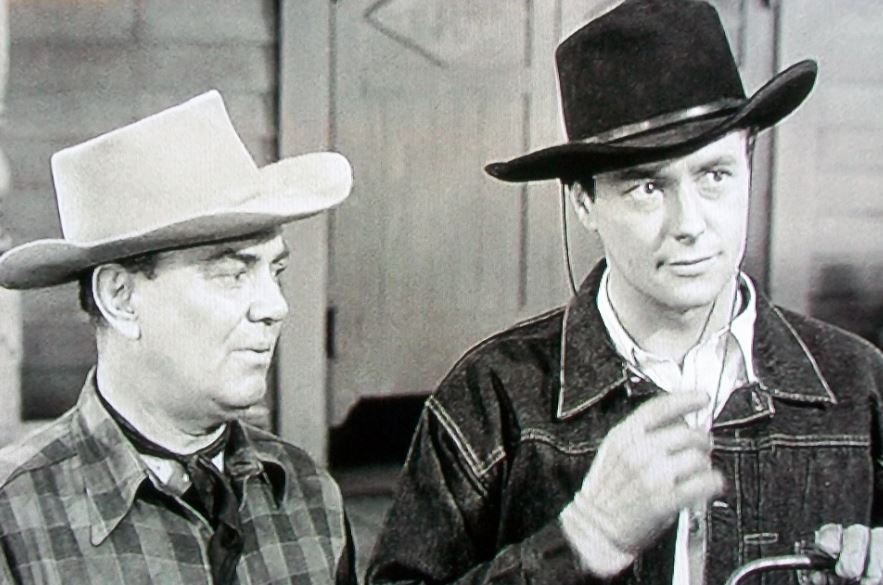
In 1971, this material was adapted for a TV-movie with Monte Markham as Death and Yvette Mimieux as the young woman who falls for him. Some interesting things are done with the background. Instead of rich Europeans, Death appears to an American family of public figures (clearly modeled on the Kennedys) who have been through much tragedy. When the adventurous daughter (Mimieux) almost drowns off the shore of family's private island, she is rescued by Markham, a handsome if mysterious stranger. The family invites him to stay for the weekend, and as he grows close to Mimieux, the aging patriarch (Melvyn Douglas), who has survived a couple of strokes, begins to recognize Markham and soon realizes that he is the figure of Death that he has already escaped from twice. He begs Markham to take him instead of Mimieux, who would have drowned off the beach, but Markham, who is eager to know why humans cling to life so fervently, claims he cannot alter destiny. Unfortunately, this version dispenses with the visual style of the original and goes for lots of sunlight; also, the supporting characters are not as interesting here (among them are Myrna Loy as the matriarch and Kerwin Mathews as a Senator). But Markham plays Death not as the powerful and chilly Prince Sirki, but as an intense but likeable loner, and his chemistry with Mimieux makes the movie worth watching. (The black & white photo is of March and Venable; the color photo on the left is Markham and on the right are Markham and Mimieux.) [YouTube]

Wednesday, October 18, 2017

CURSE OF THE FACELESS MAN (1958)

On that August day back in 79 A.D. when Mount Vesuvius exploded and destroyed the town of Pompeii, other strange things happened as well, so we are told by the narrator of this film. In the present day, a team of archeologists at Pompeii discover the petrified body of a man who died during the explosion, along with a jewel box containing a bronze medallion. The body, which seems to have turned to stone, has no facial features and is frozen in what looks like a death agony. But as it's being transported to a museum for study, the thing comes alive and kills the truck driver. The driver's body is found by the side of the road and it's assumed that he simply had an accident until an autopsy finds choking marks around his neck. Our main characters are archeologist Paul (Richard Anderson) and his artist girlfriend Tina (Elaine Edwards). While Paul works on figuring out what this stone man is, Tina is inspired by weird dreams to paint the Faceless Man even before she's seen him. Writing on the medallion is translated to mean the man's name was Quintillus Aurelius, a slave who got in trouble for loving a woman above his station. There is also a warning that whatever stands between he and what belongs to him shall perish. If you've seen a Mummy movie, you know what's coming: people seeing the creature move, people being killed by the slow-moving man, Tina being put under hypnotic regression where it is discovered that she is indeed the reincarnation of Quintillus' former lover. This low-budget horror film is oft-maligned, with some critics making it seem like an Ed Wood movie, but it's far more competent than that. At barely an hour, it goes by quickly, and though it lacks in atmosphere and characterization, the creature itself is impressive, and the mummy movie clichés are fun to tick through. There's a bit too much exposition delivered by a nameless narrator, but I like the name of the location where the climax takes place: the Cove of the Blind Fishermen. No classic, but good enough for October Chiller Theater viewing. [Amazon streaming]

Monday, October 16, 2017

THE MAN IN BLACK (1949)

Henry Clavering is a great exponent of yoga and, knowing he is sickly and perhaps not long for this world, he arranges for a display of his yogic arts at his house, putting himself in a deep trance state. He warns his audience that the slightest disturbance or distraction could be deadly to him, but we already have a good idea that his wife Bertha and stepdaughter Janice might be wishing for his early demise, eager for his money and property. As Henry falls into his trance, a painting on a wall goes crashing to the ground (an occurrence set up by Bertha) and Henry dies. But much to Bertha and Janice's dismay, his will leaves his estate to his young daughter Joan, to be taken care of by Bertha until she reaches 21, unless Joan becomes incompetent in which case Bertha gets it all. Joan shows up to live in the house, and Bertha and Janice begin a gaslighting plot, making Joan think that she's losing her mind so she can soon be declared incompetent. Also in the house: Janice's fiancé Victor who may or may not be in league with Janice, and the crusty old handyman Hodson who may know more about everything than he lets on. Soon there are weird noises in the night, menacing shadows, and another death. Joan seems to be nervously unraveling, especially when she starts insisting that she's had conversations with a character whom we've seen die, and Bertha and Janice's plot is coming to fruition. A final séance will tip the balance one way or the other.

Just who is the man in black, you might ask? Well, he's not really part of the story; he's the spooky narrator who we see briefly at the beginning and end, and he's based on a character who told tales on BBC radio in the 40s, rather like the Whistler in America. So, though the title is misleading, this is definitely a worthy little B-thriller with good acting and clever plotting. The twists near the end may not come as total surprises but nevertheless things wrap up satisfyingly.  There are few big names in the cast; Sid James, who went on to fame as a comic actor in the "Carry On" series, is Henry, and the Man in Black, Valentine Dyall, had a long B-movie career. But the rest of the cast is fine: Hazel Penwarden as Joan, Anthony Forwood as Victor, and especially the two villains—Betty Ann Davies as Bertha and Sheila Burrell as Janice. An early Hammer film which is well worth checking out. Pictured are Forwood and Davies. [YouTube]

Thursday, October 12, 2017

STAR PILOT (1966/1977)

aka 2+5: MISSIONE HYDRA

This is one crazy-ass movie. I'm still not sure if I liked it or hated it, and I may never know, but here goes. One night on the island of Sardinia, a peasant exclaims, "Holy cow!" as he witnesses a spaceship land and burrow into the ground, though he doesn't seem to tell anyone else about it. Later, the department of Advanced Geological Studies brings in Prof. Solmi to investigate a strange radioactive area of hollowness in the island's crust.  Solmi, his free-spirited daughter Louisa—who's trying to break into the movies—and his handsome assistant Paolo head off to the island, with Louisa and Paolo flirting obnoxiously. On their first night there, after a mild earthquake in the middle of the night, all three, along with two fairly hunky engineers and a Geiger counter, go down in the earth to the hollowness in which they find a spaceship buried in rock which has been stuck there for two years. In the ship are a female alien named Kaena and two muscular guys named Belsey and Artie, all clad rather sexily (as is the daughter Louisa who I was really hoping would meet an early death, but no such luck). Arriving soon after are two Asian spies (who make a point of identifying themselves as "Oriental, not Chinese") who think the buried artifact is a weapon.

The aliens force the professor to help them leave Earth, and the whole lot of them take off for Kaena's planet Hydra. Louisa gets some kind of kicky mod makeover, wearing a fishnet body stocking with a feather boa strategically wrapped around her. Kaena tells them she will return them to Earth after she gets home, but one of the "Oriental" spies overhears Kaena reporting to on overlord that she has no intention of letting them return. Suddenly, a couple minutes of footage from a movie called DOOMSDAY MACHINE with Casey Kasem communicating with a space station is inserted. And then things get really weird and hard to follow. Suffice to say that there are ape monsters, a spacewalk (without the need for a spacesuit), a crash landing, and two nuclear wars—if I followed it all, and I am by no means sure that I did.

This Italian film (badly dubbed, which is par for the course) was made in 1966 under the MISSIONE HYDRA name, but didn't get an American release until 1977 when it was called STAR PILOT (someone hoping to cash in on the Star Wars boom) and, I assume, the extra footage added, though it helps not a whit in understanding the proceedings. The first half hour plays like an amusing spy spoof until we meet the aliens when it becomes a less amusing space opera, and in its final moments it becomes a rather nihilistic message movie. If you must keep track of the plotlines, you are doomed to frustration, so just relax and chill to the sexy 60s vibes. Both women (Leonoro Ruffo as Kaena, Leontine May as Louisa) wear hotsy-totsy costumes; Belsey and Artie are decked out in form-fitting black outfits—and Belsey is played by Kirk Morris (pictured with May), one of the more handsome Italian musclemen from the sword-and-sandal era; and Paolo (Anthony Freeman), though fully dressed throughout, is quite attractive. The dialogue is atrocious; here's a sample of a dad-daughter heart-to-heart: "Hey, Pop, want some coffee?"; "Yes, dear"; "But it’s getting a bit late, isn’t it?"; "I guess so—never mind." As bad as it all is, I can't deny I had fun watching it, and I admit I'd love to see a clean widescreen version of it someday—the version I saw was full screen and in terrible shape.[YouTube]

Tuesday, October 10, 2017

THE MYSTERY OF MARIE ROGET (1942)

In 1889 Paris, musical star Marie Roget (Maria Montez) has been missing for ten days and pressure is building on the police to crack the case, especially from naval official Beauvais (John Litel), a friend of the family. Gobelin (Lloyd Corrigan), the police chief, calls on Dr. Dupin (Patric Knowles) to help, but when the body of a woman is found, her face mutilated by what look like animal claw marks, they assume they have found Marie. To everyone's surprise, however, Marie comes strolling into her grandmother's house as though nothing was out of the ordinary, and she refuses to tell anyone where she's been. Granny Cecile (Maria Ouspenskaya), who owns a pet leopard that she insists is harmless, hires Dupin to protect Marie's sister Camille, who is set to inherit a fortune the next day. Camille is engaged to navy man Marcel, but we soon discover that Marcel and Marie are in the middle of some seemingly nefarious planning. At a party that night, Marie again vanishes; another mutilated body is found in the river and this time, it is Marie.

Perhaps because it was based on an Edgar Allan Poe story, this movie was included in Universal's Shock Theater package of films sold to local TV stations in the 1950s and 60s, which is why is has a reputation as a horror film. It's really a fairly traditional mystery with some mild horror elements (the mutilated bodies, much nighttime action), so be forewarned. As B-mysteries go, it's enjoyable. There is a nice Holmes/Watson vibe between Dupin and Gobelin that carried me through the movie. I haven't read the original story so I can't comment on the film's faithfulness to Poe—though a reference is made to Dupin having solved the Rue Morgue murders—but the plot gets fairly convoluted and I didn't much care about any of the characters except the detectives, so it didn't feel like much was at stake in the outcome. The rich black and white cinematography is a plus, but not much is done to keep the atmosphere suitably spooky or dangerous. It was retitled PHANTOM OF PARIS for a 50s re-release. A little lightweight but not a waste of an hour. Pictured are Corrigan and Knowles. [DVD] 

Friday, October 06, 2017

BLOOD OF DRACULA’S CASTLE (1969)

While a rather catchy song plays on the car radio ("Next Train Out" by Gil Bernal), Ann drives and drives and drives until her car breaks down. When she goes walking through a small wooded area looking for help, she runs into Mango, a big, stumbling, mute Lurch-like figure who snatches her up and takes her to Falcon Rock Castle, out in the middle of the California desert, the residence of the Count and Countess Townshend, who, though they look on the young side of middle-aged, are actually 200-year-old vampires. Ann is taken to the basement and chained to the wall, joining the other scantily-clad women in chains from whom blood is taken daily to satisfy the Townshends' thirst. But their long routine may be coming to an end: it turns out that the vampires have been renting the castle but the owner has died, leaving the estate to his nephew Glen, a photographer. He and his girlfriend Liz head out to claim the property and break it to the residents that they'll have to move. As Glen and Liz arrive, so does Johnny, a handsome young man of the Townshend's acquaintance who has broken out of jail. He might be a werewolf—he says he goes a little crazy during the full moon—and he's returned to use his charms to bring more young women to the dungeon. There's also a moon-worshiping butler named George, and a full moon sacrifice, but ultimately very little blood.

Z-movie director Al Adamson directed this mess that is nonetheless a fairly painless viewing experience if you know what you're getting into. It is different from the run-of-the-mill vampire movie in ways both good and bad: the vampires are cultured, pleasant people—on the other hand, they're not very spooky or threatening; Johnny has the potential to be an interesting character—but he's not fleshed out very well, as the fact that we never know if he actually has a moon curse on him attests; a castle in the desert sounds kinda cool—but little is made of the setting, apparently a real California ranch. Most of the problems with the film are in the writing and filming; the acting isn’t bad. Despite not being scary, Alex D'Arcy and Paula Raymond are fine as the Townshend-Draculas—she comes off as though she's acting on a soap opera, which in these surroundings is not a bad thing. Robert Dix, son of 30s leading man Richard Dix, is quite good as the ambiguous Johnny, and Gene O'Shane and Barbara Bishop don't embarrass themselves as the romantic couple (pictured above). John Carradine does what he can with the marginal role of the butler. Despite the critical commentary on IMDb, this movie is much more professional than anything that Ed Wood ever did—though the full moon sacrifice is laughable as it's shot in a terrible attempt as day-for-night which looks like 4 in the afternoon. But I really did like the opening song. [Streaming]

Wednesday, October 04, 2017

THE PHANTOM PLANET (1961)

In the far-off year of 1980, two space pilots from the American moon base find their craft drawn to an unknown planetoid object that had been invisible just moments before. The ship crashes and the object vanishes again. This isn't the first time something like this has happened, so Captain Frank Chapman (Dean Fredericks) is taken off the Mars Project to investigate. On the way, Chapman has to do a spacewalk to fix a part but his air line breaks and when Chapman's co-pilot tries to save him, he winds up floating to his death in space (shades of 2001!). Chapman gets back in the ship only to see that same small planet suddenly appear. He is able to crash land and is thrown from the ship, unconscious. In a scene right out of Gulliver's Travels, a band of tiny inhabitants of the asteroid find him. As he begins to wake, his body inside the spacesuit shrinks to the size of the men (we later discover it's because he breathed in their air). Naked, he is taken to an underground lair, given clothes, and meet some residents of this phantom planet: the old wise sage leader (silent film star Francis X. Bushman), the lovely dark-haired mute girl Zetha, the full-figured blonde Liara, and the cocky native Herron who is immediately jealous of the impact the studly Chapman makes on Liara, his sweetie—the bleach blonde Chapman spends much of the movie strutting around in a half-opened shirt, showing off his moderately hirsute chest.

We get some backstory on their small planet, Raethon. Years ago, their race was technologically advanced but too much free time made them lazy so they have deliberately chosen a more primitive lifestyle (this also explains the low-budget cave surroundings with no need for bigger-budget flashy settings). They refuse to let Chapman go back home because they don't want their existence known. But they face a serious problem: an alien race called the Solarians. They have imprisoned a Solarite (Richard Kiel under too much make-up to recognize him, looking like a sad-eyed dog monster) but soon more of them come determined to free the prisoner and wreck havoc on the Raethonians. Eventually, after Chapman and Herron engage in a duel during which Chapman saves his rival's life, the two get chummy, and Chapman helps his hosts defeat the attacking aliens and they let him go back to Earth.

This is cheap-looking with plot loopholes galore, but it's fun in that 60s sci-fi way. Fredericks doesn't have a wide acting range but he certainly satisfies the demands of this role: to be handsome and manly and have a way with the ladies. Mostly ditto for Anthony Dexter as Herron (pictured top right with Fredericks). Richard Weber plays Chapman's co-pilot who leaves the movie early but makes an impression with an exaggeratedly earnest speech he makes about the beauty of life, delivered to Chapman while Weber (pictured at left) looks as though he's lost in hero-worship or love. It's a moment that is both sweet and laughable. Bushman, almost 80, is just too old and tired to be convincing as a leader of the alien race. The women are there as eye candy; just after a ferocious battle with Solarians, the absence of Zetha, in case we cared, is explained away because she went to bed early. But despite the many unintentionally funny bits (MST3K justifiably mocked this one), there is just enough of a kiddie matinee feel to this that isn't too hard to get through. [YouTube]

Monday, October 02, 2017

THE GREEN SLIME (1968)

First, there’s the raucous rockin' theme song: "You’ll believe it when you find/Something screaming across your mind/Green Slime!!" Once we've calmed down from that, we're told that scientists have discovered an asteroid called Flora which is on a collision course with Earth. Astronaut Robert Horton is chosen to fly up to the space station Gamma III and lead an attempt to land men on the asteroid to plant bombs that will blow the asteroid up before it reaches Earth, which will be in a matter of days. The problem is that Gamma III's commander is Richard Jaeckel, a former friend of Horton's; the two had a falling-out over some situation in which Horton felt Jaeckel was lacking in leadership skills. Oh, yeah, and Jaeckel is now engaged to Horton's former girlfriend Luciana Paluzzi, and she's the doctor on the space station. Things seem a little tense as Jaeckel obviously resents Horton being given command of this mission, but they comport themselves like gentlemen—for a while. While drilling on the asteroid to plant the bombs, the astronauts see pulsating green slime bubble up out of the ground and one guy gets some on his spacesuit. The mission is a success, but the green slime winds up on Gamma III and eventually mutates into a horde of Cyclops-eyed tentacled monsters that start killing off the crew. Will Horton and Jaeckel be able to put aside their festering dislike for each other to concentrate on saving the ship, and possibly the earth? And, since only one of them can wind up with Paluzzi, which one will do the noble self-sacrificing act at the climax of the film?

I'm back to focusing on horror and genre films for October, and since I've been discovering so many sci-fi films of the 50s and 60s on various streaming platforms recently, those films will predominate my blog this month. In 1968, this might have looked like cutting-edge sci-fi, but I doubt it (though check out that great poster art at left!). The interior sets and costumes are fine (not quite A-grade but a notch above B), but many of the exteriors have that cheap Thunderbirds miniature-model look. I can't decide if I find that charming or silly. I guess I find it goofily charming but not conducive to fostering an effective atmosphere for the movie's action. (Despite having an all-Caucasian cast, the movie was made in Japan by a mostly Japanese crew including the director, Kinji Fukasaku, who went on to direct the Japanese sequences in TORA! TORA! TORA!) The last half of the movie is a forerunner of ALIEN as crew members are killed off one by one, but though some of the death effects are good, the proceedings never feel as tense as they should. For me, the acting throws off the screenwriters' intentions: I think we're supposed to see Horton as the rational good guy and Jaeckel as, if not a bad guy, at least the damaged one, but frankly I never warmed up to the cocky but wooden Horton, so I usually found Jaeckel the more sympathetic character. Fans of slightly schlocky 60s SF will eat this up; others may tune out before the end. Pictured above right are Horton, Jaeckel and Paluzzi. [DVD]

Wednesday, September 27, 2017

CONQUEST (1937)

I've said this before on this blog: I know almost nothing about Napoleon except what I know from the movies. Someday I'll read a book about him, but until then, I have Greta Garbo and Charles Boyer to expand my knowledge. In 1807, rampaging Russians on horseback invade Poland and stop at the lavish home of the elderly Count Walewska and his lovely young wife the Countess Marie (Greta Garbo), and they and their horses trash the place. A brigade of Polish lancers scare the Russians away; among the Poles is Marie's brother Paul who tells Marie that Napoleon is in Poland. She has a strong case of hero worship for him, and she is sure that the Emperor will give her country independence. Marie first encounters him in passing on a snowy night, and later she and her father are formally presented to him at a ball in Warsaw where Napoleon immediately falls for her, despite both of them being married. She resists him until a handful of Polish leaders basically beg her to become his mistress, hoping she can then influence him to liberate Poland. She does, and he does. They have a loving (and lengthy) relationship, but eventually, Napoleon decides for the sake of diplomacy—and to have a legitimate heir—that he needs to officially divorce Josephine and marry into the royal Hapsburg family. Unfortunately, he tells Marie this just as she's about to tell him that she is pregnant.

I’m not a fan of Garbo talkies—I think she's more effective in her silent films like FLESH AND THE DEVIL and THE TEMPTRESS—and though I find her problematic here, I did enjoy the movie. Boyer is excellent at Napoleon, avoiding broad stereotypes and making him more human than mythic. There's a great supporting cast of MGM stalwarts including Henry Stephenson as Marie's husband, Reginald Owen (in a goofy wig) as Tallyrand, Maria Ouspenskaya as the Count's eccentric mother (her brief scene with Boyer is a standout), and Dame May Whitty as Napoleon's mother. The familiar faces of Leif Erickson, Alan Marshal, George Zucco, C. Henry Gordon and child star Scotty Beckett also pop up. Garbo tends to either underplay or overact, and she alternates back and forth for the first part of the film; the worst offense is in an overdone scene in which she's trying to talk Napoleon into freeing her people: "One word from you would set us free! Say it! Say it!!" To be fair, that purple dialogue would be difficult for any actor, but with Garbo's overwrought delivery, it's hard not to chuckle. However, once the character settles in as royal mistress, Garbo gets better. This movie was not a hit in its day, partly because it was so expensive to make, and anyone looking for epic war scenes will be very disappointed—though the rampaging horses moment early on is quite well done, and reminiscent of a similar scene in the earlier THE SCARLET EMPRESS. It's based on a play and it does come off as a little stagy at times, but in general, this has weathered the years well enough. [TCM]

Monday, September 25, 2017

GIRL CRAZY (1943)

This is one of the legendary "Hey, kids, let’s put on a show" movies that Mickey Rooney and Judy Garland had a lock on in the early 40s. The novelty here is the setting: an all-male mining college in the middle of the desert. In Manhattan, young Rooney's playboy antics are bringing scandal to the family name and his father decides to send him in exile to Codyville, Arizona at the aforementioned college, hoping that isolation will cure his lackadaisical ways. Rooney doesn't make many friends and is determined to leave until he meets Garland, the town's postmistress and granddaughter of the college's dean.  Rooney falls for her and when the dean discovers that the state legislature wants to close the college down, Rooney and Garland work together, staging a rodeo and beauty contest to publicize the college. There are, of course, romantic entanglements along the way to the happy ending, and the big musical finale.

The plot is not the reason why people watch these movies, it's the music and the stars, and on that level, this film works well. Rooney and Garland (pictured with Tommy Dorsey) have their chemistry down pat—this was their fifth movie together, not counting the Andy Hardy films in which Garland had a supporting role—and are delightful. I chuckled at Rooney's use of double talk slang: When he calls something "snerpy," he explains, "Well, a snerp is a looging with a belt in the back sometimes referred to as a diljo." The music is provided by the Gershwin brothers at their best: "Fascinating Rhythm" (with highlights from "Rhapsody in Blue"), "Embraceable You," "But Not for Me," "Bidin' My Time," and the big finish with "I Got Rhythm." I have to admit, however, that for me, these great songs are not really done justice here. Maybe these legendary songs will always be diminished on the screen. Still, the film is generally fun. This is a very different take on the original material, a stage show in 1930 with Ethel Merman, then a 1932 film with comics Wheeler & Woolsey that cut out most of the Gershwin score. The earlier film is funnier but this one is more satisfying musically. [DVD]

Thursday, September 21, 2017

UP IN THE AIR (1940)

At the New York studios of the Amalgamated Broadcasting Corporation, buddies Frankie Darro and Mantan Moreland do menial physical work, but when Darro sees the lovely new receptionist (Marjorie Reynolds), he pretends to be a talent scout and sets up a fake audition for her—with Moreland playing piano. She's pissed when she finds out he's a phony but he keeps on flirting. Meanwhile, radio diva Lorna Gray seems a little spooked when she catches sight of singing cowboy Gordon Jones, who has arrived in town from Oklahoma hoping to make the big time. Gray is in the middle of tough negotiations with her bosses, and during a rehearsal session, someone turns out the lights and Gray winds up shot dead. Jones seems a little too eager to leave the studio, and we soon find out that he may have had an Oklahoma connection to Gray. As Darro and Moreland investigate, they discover that the innocent-seeming Reynolds also knew Jones, as did one of the network bosses. Later, Jones is cleared—because he's found dead in the network boss's office. Will there be more deaths before the killer is caught?

I'll give almost anything with Frankie Darro a try, and he and the African-American Moreland make a fun team; their personalities shine through a weak script. I dislike the artificial Reynolds except as Linda Mason in HOLIDAY INN but she's not really a liability here since Darro and Moreland are the chief draw. I like Gordon Jones (the original Green Hornet of the movies) but he doesn't have a lot to do. There's an uncomfortable bit with Darro in blackface auditioning a comedy routine with Moreland, but the punch line is cute: when the radio producer realizes it's Darro under the blackface, he starts to rub it off his face and Moreland says, "Don't touch me—I don’t rub off!" There are a couple of so-so songs. Production-wise, this is par for the course for Monogram, but the two leading men (pictured) make this worth seeing. [Streaming]

Monday, September 18, 2017

ROMANOFF AND JULIET (1961)

An important United Nations vote on which the U.S. and Russia are on opposing sides ends in a tie until someone realizes that the tiny country of Condordia has not yet voted—most of the other delegates have never even heard of the country. Fleeing such a heavy responsibility, the president of Concordia (Peter Ustinov) says, "We have to get out of here before the Americans have time to offer us aid." Back home, the daughter of the American ambassador (Sandra Dee), disillusioned with her drab boyfriend Brian, falls for the handsome son of the Russian ambassador (John Gavin) who is about to be forced into an arranged marriage with a female solider. Thinking this could be a way to get the two countries together, Ustinov helps the forbidden romance along. After some diplomatic parrying among the three countries, Ustinov presides over the wedding of Dee and Gavin, with the two in disguise as legendary national figures at what everyone assumes is a symbolic marriage ceremony.

This sits a little uneasily between Cold War satire and romantic comedy, and although there are many amusing one-liners here, the political aspect dates the film enough that it bogs down severely in the middle. Ustinov, who also wrote the movie, wrote the play on which it is based, and directs, gives a fun twinkle-in-the-eye performance that sustains us through the rough patches. Supposedly, he was less than happy that Universal made him use contract players Dee and Gavin (pictured), but they are both delightful in fairly traditional rom-com roles. Though the rest of the actors are fine, the number of supporting characters clutters up the storyline. Among the amusing points and lines: Concordia's income is derived mostly from deliberately misprinting postage stamps—although by now the collectors are getting suspicious; when Ustinov first sees the brooding Gavin, he quips, "Who's this, Hamlet?"; a phone call in code between diplomats consists of line like "One man's meat is another man’s poison" and "Water, water everywhere and not a drop to drink," intoned portentously. Quite funny in places, and perhaps best appreciated as a period piece. [TCM]

Thursday, September 14, 2017

ANNA KARENINA (1948)

In 19th century Moscow, the Oblonskys (Stefan and Dolly) are having marital troubles, and Stefan's sister Anna is arriving from St. Petersburg to intervene on his behalf. On the train, Anna strikes up a conversation with Countess Vronsky and, at the station, meets her dashing son, the Count. He is smitten with her, and she responds to him tentatively, but young Kitty is in love with the Count and is angry when Anna monopolizes Vronsky's time at a high society ball. Though Anna is married—to a cold martinet—and has a young son, Vronsky boldly follows her back to St. Petersburg and becomes her, shall we say, companion, in public and private. The town is abuzz with the scandal and soon even her clueless husband Karenin cannot ignore the gossip, though his solution is to keep ignoring it. When Vronsky is hurt in a horse race, Anna cannot hide her concern and Karenin decides to start divorce proceedings, planning on keeping her away from their son. Eventually, Anna discovers she is pregnant with Vronksy's child, but the infant is stillborn and Anna herself almost dies. In short order, Anna stays with Karenin, Vronsky tries to kill himself, and Anna and Vronsky take off for Venice for an idyllic season together. But when her husband refuses to give her an official divorce, she worries that Vronsky will grow tired of her as a mistress and, well, as you must know if have any cultural literacy at all, she throws herself in front of a train.

Since I reviewed the 1935 Greta Garbo version of the Tolstoy novel, I have seen the 2012 version with Keira Knightley and Jude Law (interesting style but cold and uninvolving) and twice struggled with the novel, getting a hundred pages in or so before giving up. So with my viewing of this film, I may finally have Anna out of my system. The Garbo version had a superior supporting cast, but I found the main characters embodied better here: Vivien Leigh's emotional struggles are more clearly presented, Ralph Richardson is the very incarnation of the chilly though not inhuman Karenin, and the dashing Kieron Moore (better known to me as the lighthouse keeper in DAY OF THE TRIFFIDS) makes a far more interesting Vronsky than either Jude Law or Fredric March. Sally Ann Howes is fine as Kitty, with the rest of the supporting cast adequate if not memorable. This is the version I'd be most likely to return to some day if I find myself in need of a Tolstoy fix. [TCM]

Tuesday, September 12, 2017

THE GIRL IN THE SHOW (1929)

A troupe of actors is traveling across the country, visiting small towns and giving performances of Uncle Tom's Cabin. Hattie (Bessie Love), who has the juicy melodramatic role of Little Eva, travels with her kid sister Oriole, and is sweet on Mal (Raymond Hackett), the handsome actor who plays the villainous Simon Legree. While in Kansas, a couple of do-gooder citizens, concerned that the child Oriole is not getting a proper education, investigate. One of the two, Mr. Wampler, gets interested in Hattie and becomes part of a scheme to smuggle Oriole out of town away from the other do-gooders. But in the next town, the troupe becomes stranded due to floods and the manager takes off with all their money. The actors encourage Hattie to encourage Wampler and, with the understanding that she will marry him, he agrees to get enough money for the troupe to live on until they can move on. Of course, this doesn't sit well with Mal, and no one is very happy when Wampler insists that Hattie give up her career. When they decide to put on a benefit performance for victims of the flood, they let little Oriole go on as Eva, which makes Hattie realize that she still wants to act, even as part of a third-rate company. Will a happy ending be in store for anyone?

This romantic comedy is an early sound film but that's not the problem with it; instead, it's the bland and predictable script and the generally unlikeable characters, including Hattie, who treats Mal badly, leads on Wampler, seems unreasonably disgusted when she finds out he's an undertaker, and deliberately gets Oriole stuffed with chocolates to ruin her performance as Eva. And yet we're supposed to like her! Bessie Love manages to make Hattie just sympathetic enough to hope that things will work out for her. Hackett (pictured with Love) is a handsome, upright fellow who was a child star in silents—he's quite personable here so it's a bit of a mystery why he quit acting just a couple years later. Eddie Nugent, another attractive young man, is fine as Mal's friend Dave. 10-year-old Nanci Price is quite good as Oriole, especially in her amusing climactic scene on stage as Eva. The film has dated quite a bit, though it does document a real phenomenon—that of traveling acting companies dedicated to just performing versions of Uncle Tom's Cabin. [TCM]

Friday, September 08, 2017

HOT ROD GANG (1958)

Cool, handsome Johnny—college student and aspiring rock singer—is having a playful drag race with nerdy Dave, an engineer testing out a new hot rod model, but thuggish Mark, a city kid who resents Johnny's college student airs, comes along and challenges Johnny to a real race, during which Johnny almost hits an older man. Johnny makes it back to his gang's hangout, where they dance and drink sodas and work on hot rods, but the police arrive with the old man and his passengers, one of whom is young Lois, new in town. Lois recognizes Johnny but thinking him cute and likeable, doesn't ID him to the cops. We soon discover that Johnny is actually John Abernathy III, heir to a fortune, being held to a strict code of behavior by his lawyer and his two eccentric aunts, Anastasia and Abigail (who switch names every so often to keep folks on their toes). The family doesn't know about Johnny's hot rod, rock & roll life, and that evening, at a staid family gathering, Johnny officially meets Lois; her father is a new employee of the Abernathy family lawyer. She agrees to keep his secret if he'll introduce her to his friends. They sneak out of the house and head for the hangout where Johnny finds out that the landlord of their space is about to foreclose because of taxes. To get a lump sum to pay the taxes, Lois introduces Johnny to rock singer Gene Vincent who agrees to produce a record for him. But because Johnny has to hide his identity, he wears a huge fake beard and calls himself Jackson Dalrymple. His song, "Hit and Run Lover" is a hit, but just when it looks like Johnny's gang will be able to hold on to their hangout, Mark and his buddy, who are responsible for a string of auto part robberies, plant stolen goods in Johnny's car. Will the cops, not to mention Johnny's guardians, foil his plans?

As you may be able to tell from the summary above, there isn't much about hot rods or gangs in this movie, which for me is fine; it works fairly well as a light teen drama. There is a surprising amount of comedy here, so much that it can't really be called comic relief—it's more like the drama works as a "relief" to the humor. In addition to the mild comic antics of the nerd Dave, there’s Johnny's super-square put-on in front of his family, Johnny's bearded alter-ego (his silly beard might be well-regarded by today's hipsters), Lois's I’m-in-on-the-gag demeanor during the family scenes, the snarky family maid, and of course, the two spinster sisters who actually get involved in the big fisticuffs scene at the end. Though it's not intended to be funny, two performances by Gene Vincent come off as fairly humorous because of his two sidemen; dressed in preppy sweaters and what look like sailor hats, they stand right next to him on stage, clapping and dancing, and only occasionally singing background. (It helped me that one of them could pass for Ryan Reynolds' younger brother--see picture at right.) Among the talent: John Ashley (who actually can sing) as Johnny, Jody Fair as Lois, Dub Taylor (a familiar face in Westerns and 60s & 70s TV shows) as the landlord, Claire Dubray as the wry maid. Of interest to me was the presence of Maureen Arthur (pictured with Ashley at top left) as a buxom blonde hot rod girl—10 years later, she memorably played sex bomb Hedy LaRue in HOW TO SUCCEED IN BUSINESS WITHOUT REALLY TRYING, one of my favorite movie musicals. Overall a good-natured B-film with no pretensions, though those hoping for lots of hot rod action may be disappointed. [TCM]

Thursday, September 07, 2017

THE HOUSE OF THE ARROW (1953)

In Dijon, France, the rich widow Madame Harlowe has died, and Boris, her brother-in-law, is expecting a nice settlement from her will. However, it turns out that she has left most of her estate to her adopted daughter Betty (Yvonne Furneaux). Boris goes to the police and claims that Mme. Harlowe was poisoned, naming Betty as the prime suspect—though a butler, a maid and a nurse also live in the house, as does Betty's mild-mannered English friend Ann (Josephine Griffin). Boris theorizes that Betty put poison in the old lady’s orange juice, based on the fact that he saw her make a suspicious visit to a shady neighborhood herbalist. The renowned inspector Hanaud (Oscar Homolka) works the case and, though he's not sure that Boris' theory is right, he does believe that Harlowe's death may have been the result of foul play. Ann, frightened for the vulnerable Betty, brings in Jim (Robert Urquhart), a lawyer from England, to be present during the investigation. Hanaud finds a book on African poison-laced arrows at the herbalist's shop, and the hunt for an arrow in the house is on. Ann suddenly remembers hearing strange whispering and seeing figures in the dark the night of the old lady's death. Betty seems sure that the killer is Boris, but what about the nurse, the person who would have had best access to Mme. Harlowe?

Based on a novel by A.E.W. Mason, a well-known British author of the early 20th century (The Four Feathers), this has the look of a film noir (inky black shadows) but the feel of an almost whimsical cozy mystery, largely due to the playful performance of Homolka as Hanaud. Apparently Hanaud, who appeared in a handful of Mason's novels, was an inspiration for Agatha Christie's Hercule Poirot, and Homolka at times comes off a bit like Peter Ustinov did in his Poirot films—in my mind, that's a plus. There is a lack of tension for much of the running time, but the final confrontation scene plays out nicely. The rest of the actors are fine, if not particularly memorable; Urquhart has one of those supporting-actor faces that made him look familiar to me, though the only other movies of his I've seen is THE CURSE OF FRANKENSTEIN. There is an irritating accordion score but that's the only real negative I can come up with. Pictured are Furneaux, Urquhart and Griffin. [Amazon streaming]

Tuesday, September 05, 2017

THE ECHO MURDERS (1945)

This 70 minute film set during WWII is part mystery, part spy/action movie and is so crammed with incident that I'm not sure I got all the details right in my notes, but here's what I think happened:  Duncan is a wealthy man who owns a mine on the coast of Cornwall. Someone is setting off explosions at the mine in hopes of getting him to sell the land. He's also being blackmailed by his slimy secretary Rainsford who wants to marry Duncan's daughter Stella, who is interested in another worker, Warren. Duncan dismisses Warren, trying to blame the mine's problems on him, but Warren remains committed to Stella. Meanwhile, someone badly wants to get his hands on the mine plans which are kept in Duncan's safe. Feeling besieged, Duncan records a Dictaphone message asking detective Sexton Blake for help. He sends off the wax cylinder, but an intruder kills him that night. Did I mention the apparent suicide of a man named Fox who jumped or was pushed off a cliff? Or the two suspicious men who were confederates of Fox, one of whom, while casing the house to get to the safe, saw Duncan murdered? And when Blake arrives, one more puzzle piece is presented: an eccentric neighbor named Beales who heads up a local Health & Strength club, though he doesn't seem all that healthy himself. Beales' property is right above a big echoey cave on the beach where Fox's body was found, and where other odd things occur. Soon there will be another murder meant to look like a suicide, and even Blake himself will be tortured and reported dead before the culprits are caught in an explosion of guns and fisticuffs.

Sexton Blake is a pulp fiction detective and adventurer; his address on Baker Street might lead you to believe that he's a Sherlock Holmes knock-off, but based on the two Blake movies I've seen—the earlier one is reviewed here—Blake is far more of a man of action than Holmes. This film has action galore, of the B-movie variety, and even though the plot is convoluted, I could keep up with enough of it to stay interested. For most of the film's running time, you're not quite sure who's good and who's bad, or at least bad enough to commit murder and possibly be plotting with Nazis. There's even a few clever lines. Someone refers to the health society as "all orange juice and sandals," and a Cornwall cop tells Blake he's actually excited about all the fuss: "Murder is like a breath of fresh air." David Farrar, best known as the troublesome hunk in BLACK NARCISSUS, is quite good as Blake—he also played Blake in the earlier MEET SEXTON BLAKE which I hope to catch soon. The only other actor of note in the cast is Dennis Price (memorable in KIND HEARTS AND CORONETS) as Warren, but he spends a good chunk of the movie languishing in jail. Otherwise, the acting is typical for a B-film of the era. Enjoyable. [Amazon streaming]

Friday, September 01, 2017

PIRATES OF THE PRAIRIE (1942)

Deputy Marshal Larry Durant (Tim Holt) is instructed to go undercover to investigate a land grab. The frontier towns of Spencerville and East Spencerville are separated by "a dry gulch and a feud"; in the absence of elected officials, a vigilante group has been established in Spencerville to keep the peace, but they have turned a blind eye to the grabbing of property in anticipation of the arrival of the railroad. Some folks could become rich selling their ill-gotten land to the government and Durant wonders if some of the vigilantes are behind the shady doings. Durant arrives in town posing as a gunsmith and gets the attention of Lew Harmon (Roy Barcroft), second-in-command of the vigilantes—and the mastermind behind the land swindle. Harmon, suspicious of Durant, tells him a gunsmith isn't wanted in town, and his men trash Durant's storefront, but Durant stays put, with the help of the simple-minded Ike (Cliff Edwards) who lost his farm to Harmon. Durant also starts a tentative friendship with Helen Spencer, daughter of John Spencer, the head of the vigilantes (who is not aware of the machinations of Harmon and his cohorts). It turns out that there is no feud between the two towns—Harmon has used this fiction as a way to flex his power as an illegitimate lawman. When the federal surveyors come to the area, they decide to build the railroad and its depot in East Spencerville, which would ruin Harmon's big plans. The stage is thus set for shoot-outs, bar brawls, night raids, and a cold-blooded murder before the good guys prevail.

This strikes me an absolutely average B-Western of the era. It's competently done but a little slack here and there, with some shots looking like they should have been retaken, and some of the editing feeling a bit ragged. The plot is nothing out of the ordinary but serviceable enough. Same for the acting: Holt is blandly heroic but a little cold, Barcroft is stereotypically villainous, and Edwards provides fairly unobtrusive comic relief. Nell O’Day, as Helen, the love interest, hasn't much to do, and only Charles King, as a particularly nasty henchman of Harmon's, stands out of the supporting cast. Edwards (pictured above to the left of Holt), known for his ukulele playing, gets a couple of songs. And it's all over in just under an hour. [TCM]

Tuesday, August 29, 2017

TORMENTED (1960)

Noted jazz pianist Tom Stewart (Richard Carlson) is renting a beach bungalow on a resort island. He spends a lot of his free time in a deserted lighthouse while he prepares for a big concert performance, and for his marriage to his wholesome sweetheart Meg. Unfortunately, one night his old flame, sexy nightclub singer Vi Mason (Juli Redding), sneaks onto the island and threatens to expose their sordid past if he doesn't call the wedding off. They discuss the issue up in the lighthouse, and when the railing gives way, Vi falls. Grasping on with one hand, she begs Tom to save her; he reaches out but pulls back and she falls to her death. Soon, Tom feels haunted by Vi's ghost: seeing her body in the water, he carries it to be the beach but it turns to seaweed; his wedding ring goes missing; Vi's watch appears in his house; phantom footprints walk next to him on the beach; a record of Vi singing a song called "Tormented" plays even after Tom takes it off the phonograph; creepiest of all, her disembodied hand and head pop up from time to time. Soon everyone notices Tom's a little off; not just Meg but Meg's kid sister Sandy (Susan Gordon) and the good-natured—but nosy—blind landlady (Lillian Adams). Despite Tom's odd behavior, and despite her father's dislike for Tom, Meg insists on going through with the wedding, but the arrival on the island of an unsavory character (Joe Turkel) who brought Vi over from the mainland and wonders what's happened to her changes Tom's plans.

I discovered this low-budget thriller from Bert I. Gordon when it was mocked on Mystery Science Theater 3000; their version is lots of fun, but I have come to appreciate the movie on its own merits. Part of the fun is figuring out if there really is a ghost or if a guilty Tom is just losing his mind—though he definitely wants Vi out of the way, he doesn't plan on killing her, and when she does die, he doesn’t directly cause it, he just pauses long enough in helping her that she loses her grip. His guilt here isn't strictly speaking based on him breaking a legal code but a moral code. Some critics say Carlson's performance is on the wooden side, but I think he does a nice job sliding back and forth between acting distracted because of guilt and feeling that his relationship with Meg and her sister will somehow redeem him. Is there a ghost? By the wedding scene near the end, you'll probably have decided, but until then, it's a toss-up. The other actors don't give Carlson much support: young Susan Gordon, only 11 at the time, is OK but tries a little too hard in her more melodramatic moments—possibly the fault of her dad, the director. Lugene Sanders is pretty bad as Meg, so much so that I wondered why Tom didn’t run off with Vi (the answer: Meg's family has money). Juli Redding is fine in her limited screen time as Vi, and Lillian Adams as the blind lady who is the first to figure out what might be going on, is serviceable. Joe Turkel, fine as the young tough who tries to blackmail Tom, went on to cult fame as the ghostly bartender in THE SHINING and as Dr. Tyrell in BLADE RUNNER. The wedding scene plays out nicely but feels truncated (did what we see really happen or was it all in Tom's mind?) so we can rush to the climax, back in the lighthouse. If you're in the mood for a Chiller Theater B-movie, this will do nicely. But also go ahead and catch the MST3K version as well. Pictured are Carlson and Redding in the flesh (at top right) and with Redding in ghostly form. [DVD]

Friday, August 25, 2017

AN AMERICAN TRAGEDY (1931)

Young Clyde Griffiths (Phillips Holmes) comes from a humble background—he grows up living in the Skid Row mission his parents run—but wants better things. We see him working as a bellhop in a Kansas City hotel, flirting with a rich girl but dating a lowly hotel maid. While out with his drunken friends, he is involved in a car crash that kills a pedestrian; he manages to run away fast enough to avoid any connection and leaves town. He eventually winds up in New York and gets a job at his uncle's shirt factory. He’s making money, but finds the work boring and beneath him. Invited to his uncle's house, he fails to make a good impression due to his sullen personlity. But at the factory, he becomes smitten with new worker Roberta Alden (Sylvia Sidney, pictured with Holmes) and though it's against the rules, the two see each other on the sly. He pressures her to have sex, and soon she is pregnant and pressing him for marriage. But he has since met the rich and lovely Sondra Finchley (Frances Dee) and, seeing a much better future with her, begins to fantasize about killing Roberta by faking a canoeing accident. One summer day, the two go out to a deserted part of a lake and he starts to act on his impulse. At the last minute, he stops himself, but the canoe tips anyway and she drowns. He rather heartlessly leaves the scene to go partying with Sondra and her moneyed crowd, but soon the police are able to draw a web of circumstantial evidence around him.

It's difficult to know how to approach this film critically. Based on a classic novel by Theodore Dreiser, directed by the stylish Josef von Sternberg, and filmed in the pre-Code era when filmmakers could deal with most of the movie’s "unsavory" themes (premarital sex, abortion, a crime of passion), there was definitely potential here for a classic movie. However, this just scratches the surface of the novel, coming off like a bland Reader's Digest condensation, and with very few of the visual flourishes one might expect from Sternberg. In the novel, Clyde's upbringing is crucial to an understanding of how his personality develops, but the movie skips over almost all of that. Holmes does manage to make the character passive, callow and unfeeling (his masculinity is questioned often enough that it made me wonder if Sternberg was suggesting some sexual orientation conflict) but we wind up with very little sympathy for him; Roberta is only lightly sketched as a character, and Sondra is barely present, so there is really no one in the story for us to identify with. Perhaps if I hadn't read the novel, my reaction would be different. The 50s film version, A PLACE IN THE SUN, is glossier with rounder characters, though still no match for the book, which admittedly gets hard to plow through in the last third. Interesting mainly as a pre-Code relic. [DVD]